While Cornell's Kevin Boothe had an outside shot at being picked yesterday (he wasn't), it's almost always the second day when Ivy League players hear their names called -- if they are called at all. (See below). While he's been projected as high as the third round, Boothe might have to wait until the late sixth round according to SI.com. The same site has Brown tailback Nick Hartigan as a free agent along with Princeton corner Jay McCareins and Yale quarterback Jeff Mroz. ... It's a tough business. The NFL.com site said of Boothe, "... his technique is so bad that he consistently was beaten and his man made/disrupted a lot of plays." ...
NFL Draftees in the Last Decade
(with year, school, position, team, round, selection No.)
2005 - Harvard QB Ryan Fitzpatrick (St. Louis, 7th,250)
2004 - Yale TE Nate Lawrie (Tampa Bay, 6th, 181); Dartmouth TE Casey Cramer (Tampa Bay, 7th, 228)
2002 - Penn OL Jeff Hatch (NY Giants, 3rd, 78)
2001 - Princeton C Dennis Norman (Seattle, 7th, 222), Yale DB Than Merrill (Tampa Bay, 7th, 223), Yale TE Eric Johnson (San Francisco, 7th, 224)
2000 - Harvard LB Isaiah Kacyvenski (Seattle, 4th, 119)
1999 - Brown WR Sean Morey (New England, 7th, 241), Penn FB Jim Finn (Chicago, 7th, 253)
1998 - Penn DE Mitch Marrow (Carolina, 3rd, 73), Dartmouth LB Zack Walz (Arizona, 6th, 158), Harvard C Matt Birk (Minnesota, 6th, 173)
1997 - Columbia DE Marcellus Wiley (Buffalo, 2nd, 52), Cornell NT Seth Payne (Jacksonville, 4th, 114); Cornell TB Chad Levitt (Oakland, 4th, 123)
Dartmouth defensive back/running back recruit Peter Pidermann gets a mention in the Miami Herald after finishing fourth in the 110-meter hurdles and eighth in the 300-meter hurdles in a Florida state championship. ... Cornell coach Jim Knowles might be reworking his option offense if the spring game in Ithaca is any indication. The Big Red piled up 355 passing yards in Saturday's spring finale. ... It's a gorgeous day in Hanover. Let's play two! Dartmouth and Harvard will be doing just that with the Red Rolfe Division title on the line. After splitting with the Crimson yesterday on the road, Dartmouth returns to Hanover today, one game behind in the division race. If the Big Green can sweep the Crimson it will claim the Red Rolfe title.

Sunday, April 30, 2006

Saturday, April 29, 2006
April 29 Practice Recap and Stats
By Bruce Wood
www.biggreenalert.com
Hanover -- Chris Wielgus, Dartmouth's tremendously successful women's basketball coach, often portrays her sport as one of "alternating currents."
Football coach Buddy Teevens stole a page from his coaching colleague after Saturday's skelly passing drill and 65-play scrimmage.
"It was back and forth this week," Teevens said. "Today the defense was really geared up and played with emotion. It was a little bit of a payback opportunity from the last scrimmage situation. It's as I told the guys, this happens in a ballgame. There's an ebb and a flow."
Ebb and flow or alternating currents. Whatever you want to call it, the defense dominated the scrimmage action in the early going -- with help from several fumbled snaps and passes that went awry -- before the offense found a little bit of its rhythm.
Tom Bennewitz was under center with the first unit to start the scrimmage action, but a fumbled snap sent that group back to the sidelines on the opening play.
Incumbent start Josh Cohen then came on with the second unit, completing a short pass to Eric Paul, but he headed to the sideline one snap later when Milan Williams was stopped short of a first down.
Then it was Mike Fritz' turn and he went three-and-out with help from a no-gain tackle by defensive end Jack D'Angelo on second down and a sack by Dan Cook on third down.
The second series for each quarterback went no better as linebacker Taylor Babcock picked off Bennewitz' first pass, Cohen was handicapped by consecutive problems on the center-QB exchange before an overthrow on third down and Fritz went three-and-out again when Rehan Muttalib smelled out a screen and stopped Dan Siegfried for no gain.
"The nice thing was that there wasn't a rattle mindset" on the part of the offense, Teevens said. "It was, 'OK, let's just do our stuff.' And then it kicked in and they started to make a few plays.
"I thought the QB's pressed and forced some balls, especially some deep balls when they should have come underneath and that disrupts a drive."
Midway through the scrimmage action the offenses began to make plays. Williams broke off a 33-yard gain for the morning's initial first down and Bennewitz hit 3-of-4 passes on the first sustained drive.
On the next series, Jason Bash ripped off a 15-yarder and Williams an 11-yarder as Fritz directed a drive that collected three first downs.
The first points of the day came after Cohen found Ryan Fuselier for 45 yards to the plus-35 and then hit Sam McDonald for 15 yards. Andrew von Kuhn got the TD on a 6-yard strike from Cohen with Erik Estabrook nailing the PAT.
Fritz hit four passes in the next drive, capped by Andrew Seidman's 1-yard run for a TD. That PAT came off low and was blocked by the middle of the line.
Despite several penalties, Cohen had the offense moving again on the final march of the day before another fumbled snap signaled an end of the action.
While the play was uneven -- particularly on the offensive side, Teevens was relatively upbeat when the practice broke up.
"I thought Milan looked pretty good," he said. "Eric Paul had a good day catching some passes. Sammy Mac (McDonald) caught some. Andrew von Kuhn. Fuse (Ryan Fuselier) got the long one. It was nice to see him stick a post and us have success with a long ball, which we haven't done a whole lot of.
"Defensively I thought our linebacking crew tackled better. As a defense we tackled more efficiently. We had more pressure on the passer than we have demonstrated. That's been a big push up front. (Chris) Blanco and (John) Manning in the secondary played OK. It was nice to have John Pircon back at safety (from a finger injury). He's a pretty savvy guy back there."
Also earning a nod from Teevens: center Elliott Dial. "He doesn't always get notice but he's playing guard and center for us and is doing areal nice job."
Although he would have liked more offensive production early, Teevens was pleased with the way that side of the ball hung together.
"Fumbling the first snap is not a good tone to set but the guys did rebound," he said. "After 30 plays some of the guys were kind of hanging their heads. I told them, 'That's a third of a game. Maybe a half. So you have to come back and they did.
"We shuffled it. The twos and the ones sort of rotated back and forth after that. The execution was cleaner and the second offense moved the ball against the first defense. Then the first defense came back and it was like, 'Hey, we're back.' "
The ebb and flow will continue Monday in the final week of spring practice that will be capped Saturday by the Green & White scrimmage. Teevens hasn't yet firmed up the format for the event, but given just three quarterbacks and a small contingent of running backs, it's doubtful he'll conduct it as a real game. More likely: the offense against the defense.
NOTES: "We came away uninjured except for (Dan) Siegfried rolling his ankle," Teevens said. "It was a little scary when Milan went down on the sideline but he just knocked his kneecap."
With Siegfried questionable, Hudson Smythe battling a hamstring, Nate Servis in a yellow vest and Chad Gaudet unavailable, Teevens is running short on healthy backs as the spring winds up.
"That's fine," he said. "We'll just throw it a little more. That will be good for everybody."
Here are some extremely unofficial statistics:
Passing
Tom Bennewitz 6-10--34 yards, 1 int
Josh Cohen 7-11--100 yards, 1 td
Mike Fritz 5-7--53 yards
Leading Receivers
Eric Paul 4-48
Brett Lowe 2-24
Chris Collado 2-15
Andrew von Kuhn 2-12, 1 td
Ryan Fuselier 1-45
Leading Rushers
Milan Williams 8-66 (not counting a 70-plus TD called back)
Jason Bash 5-17
Dan Siegfried 6-10
Andrew Seidman 4-9 1 td
PATs
Erik Estabrook 1-2 (1 blocked)
There was also a "pass skelly" with tackling. Numbers for that:
Passing
Bennewitz 4-7, 79 yards
Cohen 2-7, 21 yards
Fritz 5-7, 70 yards
Receiving
Paul 3-63
Sam McDonald 2-37
Williams 2-25
Chris Collado 2-24
Zack Cable 2-21
www.biggreenalert.com
Hanover -- Chris Wielgus, Dartmouth's tremendously successful women's basketball coach, often portrays her sport as one of "alternating currents."
Football coach Buddy Teevens stole a page from his coaching colleague after Saturday's skelly passing drill and 65-play scrimmage.
"It was back and forth this week," Teevens said. "Today the defense was really geared up and played with emotion. It was a little bit of a payback opportunity from the last scrimmage situation. It's as I told the guys, this happens in a ballgame. There's an ebb and a flow."
Ebb and flow or alternating currents. Whatever you want to call it, the defense dominated the scrimmage action in the early going -- with help from several fumbled snaps and passes that went awry -- before the offense found a little bit of its rhythm.
Tom Bennewitz was under center with the first unit to start the scrimmage action, but a fumbled snap sent that group back to the sidelines on the opening play.
Incumbent start Josh Cohen then came on with the second unit, completing a short pass to Eric Paul, but he headed to the sideline one snap later when Milan Williams was stopped short of a first down.
Then it was Mike Fritz' turn and he went three-and-out with help from a no-gain tackle by defensive end Jack D'Angelo on second down and a sack by Dan Cook on third down.
The second series for each quarterback went no better as linebacker Taylor Babcock picked off Bennewitz' first pass, Cohen was handicapped by consecutive problems on the center-QB exchange before an overthrow on third down and Fritz went three-and-out again when Rehan Muttalib smelled out a screen and stopped Dan Siegfried for no gain.
"The nice thing was that there wasn't a rattle mindset" on the part of the offense, Teevens said. "It was, 'OK, let's just do our stuff.' And then it kicked in and they started to make a few plays.
"I thought the QB's pressed and forced some balls, especially some deep balls when they should have come underneath and that disrupts a drive."
Midway through the scrimmage action the offenses began to make plays. Williams broke off a 33-yard gain for the morning's initial first down and Bennewitz hit 3-of-4 passes on the first sustained drive.
On the next series, Jason Bash ripped off a 15-yarder and Williams an 11-yarder as Fritz directed a drive that collected three first downs.
The first points of the day came after Cohen found Ryan Fuselier for 45 yards to the plus-35 and then hit Sam McDonald for 15 yards. Andrew von Kuhn got the TD on a 6-yard strike from Cohen with Erik Estabrook nailing the PAT.
Fritz hit four passes in the next drive, capped by Andrew Seidman's 1-yard run for a TD. That PAT came off low and was blocked by the middle of the line.
Despite several penalties, Cohen had the offense moving again on the final march of the day before another fumbled snap signaled an end of the action.
While the play was uneven -- particularly on the offensive side, Teevens was relatively upbeat when the practice broke up.
"I thought Milan looked pretty good," he said. "Eric Paul had a good day catching some passes. Sammy Mac (McDonald) caught some. Andrew von Kuhn. Fuse (Ryan Fuselier) got the long one. It was nice to see him stick a post and us have success with a long ball, which we haven't done a whole lot of.
"Defensively I thought our linebacking crew tackled better. As a defense we tackled more efficiently. We had more pressure on the passer than we have demonstrated. That's been a big push up front. (Chris) Blanco and (John) Manning in the secondary played OK. It was nice to have John Pircon back at safety (from a finger injury). He's a pretty savvy guy back there."
Also earning a nod from Teevens: center Elliott Dial. "He doesn't always get notice but he's playing guard and center for us and is doing areal nice job."
Although he would have liked more offensive production early, Teevens was pleased with the way that side of the ball hung together.
"Fumbling the first snap is not a good tone to set but the guys did rebound," he said. "After 30 plays some of the guys were kind of hanging their heads. I told them, 'That's a third of a game. Maybe a half. So you have to come back and they did.
"We shuffled it. The twos and the ones sort of rotated back and forth after that. The execution was cleaner and the second offense moved the ball against the first defense. Then the first defense came back and it was like, 'Hey, we're back.' "
The ebb and flow will continue Monday in the final week of spring practice that will be capped Saturday by the Green & White scrimmage. Teevens hasn't yet firmed up the format for the event, but given just three quarterbacks and a small contingent of running backs, it's doubtful he'll conduct it as a real game. More likely: the offense against the defense.
NOTES: "We came away uninjured except for (Dan) Siegfried rolling his ankle," Teevens said. "It was a little scary when Milan went down on the sideline but he just knocked his kneecap."
With Siegfried questionable, Hudson Smythe battling a hamstring, Nate Servis in a yellow vest and Chad Gaudet unavailable, Teevens is running short on healthy backs as the spring winds up.
"That's fine," he said. "We'll just throw it a little more. That will be good for everybody."
Here are some extremely unofficial statistics:
Passing
Tom Bennewitz 6-10--34 yards, 1 int
Josh Cohen 7-11--100 yards, 1 td
Mike Fritz 5-7--53 yards
Leading Receivers
Eric Paul 4-48
Brett Lowe 2-24
Chris Collado 2-15
Andrew von Kuhn 2-12, 1 td
Ryan Fuselier 1-45
Leading Rushers
Milan Williams 8-66 (not counting a 70-plus TD called back)
Jason Bash 5-17
Dan Siegfried 6-10
Andrew Seidman 4-9 1 td
PATs
Erik Estabrook 1-2 (1 blocked)
There was also a "pass skelly" with tackling. Numbers for that:
Passing
Bennewitz 4-7, 79 yards
Cohen 2-7, 21 yards
Fritz 5-7, 70 yards
Receiving
Paul 3-63
Sam McDonald 2-37
Williams 2-25
Chris Collado 2-24
Zack Cable 2-21
Waiting Ends This Weekend for Ivy Draft Hopefuls
The NFL draft begins today and there are stories about each of the Ivy League's draft hopefuls. Cornell offensive lineman Kevin Boothe, who could go today, is profiled at length in this Ithaca Journal story. ... Brown coach Phil Estes tells the Providence Journal that tailback Nick Hartigan belongs, but probably won't hear his name called until late -- if at all -- tomorrow. ... The Trenton Times takes a look at defensive back/special teams standout Jay McCariens, whose brother is already in the NFL. ... One name that kind of slipped through the cracks until the last few days is that of Yale quarterback Jeff Mroz. Sports Illustrated online calls him a "hidden gem," and writes that he's one of "a number of lesser-known names you could be soon hearing more about." ... Dartmouth's Anthony Gargiulo had a good experience with rugby this spring, but it would be only natural if he found himself wondering sometime this weekend if his phone would have rung sometime late Sunday afternoon if he'd pursued the NFL. Green Alert Draft Take: Boothe will go in the third or fourth round and the others will agree to free agent contracts Sunday night. (At least that's the way it feels after watching Ivy hopes wax and wane on draft weekend for the past 20 years.) ...
This is kinda interesting. Harvard had its spring game yesterday and incumbent starter Liam O'Hagan was not the No. 1 quarterback. Information is sketchy so it's possible the kid had a muscle pull or something. Still, here's what the school web page wrote: "Quarterback Chris Pizzotti, who ran the first-team offense, completed 20 of 40 passes for 192 yards and two touchdowns ..."
Ivy League football coaches tabled their push for an 11th game several years ago to instead channel their efforts into getting the green light to go to the playoffs. (Good luck with that one, fellas.) Meanwhile the rest of Division I-AA was pushing for a 12th game. The NCAA this week shot that motion down. The governing body of college football also held off on renaming I-A and I-AA, apparently to better consider the alternatives. Read about both moves here.
And finally, what would an NCAA meeting be without some discussion of Indian mascots, a subject Dartmouth alums know so well. From an NCAA release Friday:
This is kinda interesting. Harvard had its spring game yesterday and incumbent starter Liam O'Hagan was not the No. 1 quarterback. Information is sketchy so it's possible the kid had a muscle pull or something. Still, here's what the school web page wrote: "Quarterback Chris Pizzotti, who ran the first-team offense, completed 20 of 40 passes for 192 yards and two touchdowns ..."
Ivy League football coaches tabled their push for an 11th game several years ago to instead channel their efforts into getting the green light to go to the playoffs. (Good luck with that one, fellas.) Meanwhile the rest of Division I-AA was pushing for a 12th game. The NCAA this week shot that motion down. The governing body of college football also held off on renaming I-A and I-AA, apparently to better consider the alternatives. Read about both moves here.
And finally, what would an NCAA meeting be without some discussion of Indian mascots, a subject Dartmouth alums know so well. From an NCAA release Friday:
The NCAA Executive Committee today retained the University of Illinois, Champaign, the University of North Dakota and Indiana University of Pennsylvania on the list of colleges and universities subject to restrictions on the use of Native American mascots, names and imagery at NCAA championships.Among the schools that has been adamant about keeping its nickname is the University of North Dakota. Under a banner featuring a characterization of the Fighting Sioux, the Grand Forks Herald wrote today: "UND's streak of hosting college football playoff games might have officially come to an end Friday, four months before the season starts." ... Speaking of North Dakota, echoes of the past will no doubt be heard next winter when the school's powerhouse ice hockey team visits Thompson Arena and the Fighting Sioux fans begin to chant.
Friday, April 28, 2006
Friday, April 28 Practice Story
By Bruce Wood
www.biggreenalert.com
Hanover -- Saturday's Dartmouth football practice is going to be worth watching.
Don't take it from me. Take it from coach Buddy Teevens.
"My comment to the guys after practice," Teevens said with a wicked grin Friday, "was that it ought to be real interesting tomorrow. The way it went today, I'm going to be r-e-a-l excited to see how we play."
After drills and pass skeleton Saturday morning, Teevens plans to run as many as 60 or 70 snaps of full-contact (except for the quarterbacks) scrimmaging. Making the action interesting: what happened Wednesday, what happened Friday and how Friday's practice ended.
Rewind to Wednesday and the long-suffering offensive line started to blow holes in the defense, allowing Jason Bash, Milan Williams and several other tailbacks to pile up the yardage.
Friday was a completely different story.
"It was interesting to see how we responded to having some offensive success," Teevens explained. "We haven't had a whole bunch of it and all of a sudden the defense couldn't stop anybody. But the offense comes back today and feels like, 'Hey, we've arrived,' and we haven't.
"Then the defense gets angry and they gear it up. It was a much more complete performance today. They really responded while the offense was complacent and not as sharp in terms of focus. We had some alignment errors. We had some execution errors and we can't afford to do those things. It will be interesting tomorrow."
Now factor in how Friday's practice ended.
When a short completion was followed by a questionable hit on a day when contact was limited, the offense took, well, it took offense. The resultant shove or two led to the defense taking offense. That led to the to the closest thing you'll see to a baseball fight where both dugouts empty and not much happens.
Making sure it didn't was Teevens, who alertly pulled out his whistle and put away his smile.
"It's nice to see the guys be as competitive as they were," he said, choosing his words carefully. "You don't want them to get cheap or dirty or retaliatory, but you want to keep them right on the edge, which I think they were.
"I think it got them stoked up knowing there's scrimmaging tomorrow. We had three more plays to go and I blew the whistle. We didn't need anymore. We'll save it for tomorrow."
PRACTICE NOTES Once again, one of the most noticeable plays was initiated by quarterback-turned-safety Casey Frost, whose well-timed hit on a receiver jarred the ball loose and into the air. Picking it off to great fanfare on the defensive side was Jamie Whitticom. The linebacker followed a few minutes later with a nice deflection that thrilled his position coach. ...
But Frost was hardly the only defender who stepped up.
"Mike Rabil and Brian Osimiri did a better job inside today," Teevens said. "Joey Gibalski made some strides. There was some good energy on the defensive side." ...
Among those looking on from the sidelines was graduating senior Erik Hinterbichler, last fall's first-team placekicker and punter.
UPCOMING Teevens on Saturday's practice: "We'll do some pass skeleton and some preliminary stuff. We need to tackle better in the secondary and linebacker position. We'll get the guys real sharp and then go into a scrimmage format. It will be drive format. We may segment it down and do some red zone area stuff but I'd like to just drive the football and see how it all ends up.
ETC. On Wednesday coaches from Division III Vermont school Norwich University were in town to watch practice. Friday saw a large contingent of coaches from New Hampshire Division III school Plymouth State University. Plymouth (I refuse to call the school PSU because there's only one real PSU) was a D-III national powerhouse in the early '80s and drew national attention when running back Joe Dudek became the people's (and Sports Illustrated's) choice for the Heisman Trophy. Dudek, by the way, finished ninth in the 1985 Heisman race.
LOOKING AHEAD TO THE GREEN-WHITE Teevens hasn't settled on a format for the scrimmage that will end spring practice a week from Saturday.
"The biggest thing is injuries," the coach said. "You are always directed by who's available and who's not. We had one guy go down with a hamstring and a couple other guys are coming back so we don't know who we're going to have. I haven't decided how we'll play it.
www.biggreenalert.com
Hanover -- Saturday's Dartmouth football practice is going to be worth watching.
Don't take it from me. Take it from coach Buddy Teevens.
"My comment to the guys after practice," Teevens said with a wicked grin Friday, "was that it ought to be real interesting tomorrow. The way it went today, I'm going to be r-e-a-l excited to see how we play."
After drills and pass skeleton Saturday morning, Teevens plans to run as many as 60 or 70 snaps of full-contact (except for the quarterbacks) scrimmaging. Making the action interesting: what happened Wednesday, what happened Friday and how Friday's practice ended.
Rewind to Wednesday and the long-suffering offensive line started to blow holes in the defense, allowing Jason Bash, Milan Williams and several other tailbacks to pile up the yardage.
Friday was a completely different story.
"It was interesting to see how we responded to having some offensive success," Teevens explained. "We haven't had a whole bunch of it and all of a sudden the defense couldn't stop anybody. But the offense comes back today and feels like, 'Hey, we've arrived,' and we haven't.
"Then the defense gets angry and they gear it up. It was a much more complete performance today. They really responded while the offense was complacent and not as sharp in terms of focus. We had some alignment errors. We had some execution errors and we can't afford to do those things. It will be interesting tomorrow."
Now factor in how Friday's practice ended.
When a short completion was followed by a questionable hit on a day when contact was limited, the offense took, well, it took offense. The resultant shove or two led to the defense taking offense. That led to the to the closest thing you'll see to a baseball fight where both dugouts empty and not much happens.
Making sure it didn't was Teevens, who alertly pulled out his whistle and put away his smile.
"It's nice to see the guys be as competitive as they were," he said, choosing his words carefully. "You don't want them to get cheap or dirty or retaliatory, but you want to keep them right on the edge, which I think they were.
"I think it got them stoked up knowing there's scrimmaging tomorrow. We had three more plays to go and I blew the whistle. We didn't need anymore. We'll save it for tomorrow."
PRACTICE NOTES Once again, one of the most noticeable plays was initiated by quarterback-turned-safety Casey Frost, whose well-timed hit on a receiver jarred the ball loose and into the air. Picking it off to great fanfare on the defensive side was Jamie Whitticom. The linebacker followed a few minutes later with a nice deflection that thrilled his position coach. ...
But Frost was hardly the only defender who stepped up.
"Mike Rabil and Brian Osimiri did a better job inside today," Teevens said. "Joey Gibalski made some strides. There was some good energy on the defensive side." ...
Among those looking on from the sidelines was graduating senior Erik Hinterbichler, last fall's first-team placekicker and punter.
UPCOMING Teevens on Saturday's practice: "We'll do some pass skeleton and some preliminary stuff. We need to tackle better in the secondary and linebacker position. We'll get the guys real sharp and then go into a scrimmage format. It will be drive format. We may segment it down and do some red zone area stuff but I'd like to just drive the football and see how it all ends up.
ETC. On Wednesday coaches from Division III Vermont school Norwich University were in town to watch practice. Friday saw a large contingent of coaches from New Hampshire Division III school Plymouth State University. Plymouth (I refuse to call the school PSU because there's only one real PSU) was a D-III national powerhouse in the early '80s and drew national attention when running back Joe Dudek became the people's (and Sports Illustrated's) choice for the Heisman Trophy. Dudek, by the way, finished ninth in the 1985 Heisman race.
LOOKING AHEAD TO THE GREEN-WHITE Teevens hasn't settled on a format for the scrimmage that will end spring practice a week from Saturday.
"The biggest thing is injuries," the coach said. "You are always directed by who's available and who's not. We had one guy go down with a hamstring and a couple other guys are coming back so we don't know who we're going to have. I haven't decided how we'll play it.
Panthers Re-Sign Casey Cramer
Casey Cramer '04, the All-America tight end who was drafted by Tampa Bay two years ago and has spent parts of the past two seasons as a fullback for Carolina, has inked a new one-year deal with the Panthers worth $425,000. (link)
Former Captain Running for Maryland Office
 Dartmouth's airy new Fitness Center on the top floor of Alumni Gym as seen from the spinning mezzanine. (This center is apart from the varsity team and football team's weight and training rooms.)
 The spinning area on the mezzanine looks out the arched window. (Photos courtesy of Dartmouth sports Information)
To see more pictures of Dartmouth's phenomenal new Fitness Center, click here. (And be sure to click on a few of the snaps to enlarge them.)
Stuart Simms Up for Lieutenant Governor
Former Baltimore state's attorney Stuart Simms '72, who co-captained an 8-1 Dartmouth team as a senior (along with current radio announcer Wayne Young) could be Maryland's next lieutenant governor. A very nice bio of Simms can be found here. For the announcement of his candidacy, click here.
I'm struggling to decide which pun works better with regard to the Cornell spring game that will be played this Saturday. Whether I should write that games against yourself are always a "wash," or whether Cornell, unlike Penn State last week, won't have to worry about a "washout." What's with the puns? The Big Red has more at stake in its spring game than pride. Here's what the football web site has to say about a neat idea:
"... the loser of the spring game, including the coaching staff, will have primary duties in washing cars for charity on Sunday, April 30 from 10 a.m. to 2 p.m. at the ShortStop Deli on West Seneca Street in Ithaca. It is a great opportunity to rid your car of any winter elements, while meeting the Big Red football staff and members of the Big Red. This open donation event will benefit Family and Children's Service of Ithaca."
Cornell offensive lineman Kevin Boothe's NFL draft chances are analyzed nicely on Seattle's Seahawks.net site.
Former Dartmouth assistant Roger Hughes has the first of several Q&A looks at the status of his Princeton team and program here.
I remember being impressed when I learned that former New Hampshire running back-turned Chicago Bears defensive back Jerry Azumah had written a check to help his alma mater open the Jerry Azumah Athletic Performance Center several years ago. (Azumah, 25 at the time, became "the youngest UNH alum on record to give a gift of more than $100,000 to his alma mater," according to this release.) Azumah '99, who retired after last season, will be hosting a fundraising event in Portsmouth, N.H., next week that, according to this release, "... will benefit the Azumah Student Assistance Program (A+SAP), which funds scholarship aid for inner- city high school athletes in Chicago and Worcester, as well as the Wildcat Athletics Council, which provides scholarships for University of New Hampshire student-athletes." Classy guy. Among those who Azumah will be bringing to New Hampshire for the event: former teammate Brian Urlacher.
Thursday, April 27, 2006
Gridders Boost Rugby
Today's Daily Dartmouth has a story about the Big Green rugby team's 40-20 win over Ohio State in the national Sweet 16 and subsequent loss to No. 2 Penn State that denied a trip to the Final Four. The story mentions that former defensive end Anthony Gargiulo had a try, but it also mentions that fellow senior Mark Goodson bookended the day's scoring with a try to open play and another to close it. Goodson was a junior varsity quarterback. Former tight end Joe Killefer is a stalwart on the Dartmouth squad and former corner back Mike Ribero, like Gargiulo and Killefer, was an All-Ivy pick in his first season playing the sport.
Several Ivy school papers have stories today about the league's draft chances. The Harvard Crimson notes that with quarterback Ryan Fitzpatrick going to the Rams last year and Clifton Dawson on the radar screen a year from now, draft watching will be a little less fun in Cambridge this weekend. ... The Columbia Spectator offers some opinions on Cornell offensive lineman Kevin Boothe (a possible first-day pick), Brown tailback Nick Hartigan (a possible late-round choice) and Princeton defensive back Jay McCareins (a darkhorse to go late). ... Even the Daily Dartmouth has a column that touches on the draft, although it does not have an Ivy angle.
Speaking of Dawson, the Harvard Crimson has an informative followup on his selection in the CFL draft, explaining why he was drafted as a junior and what it means.
Rabid Dartmouth fans and players from the late '80s probably remember Rob McGovern, a former Holy Cross captain and linebacker who went on to play four years in the NFL. Check out this story on the Holy Cross football site for an interesting look at what former the Crusader is doing these days.
Finally, Princeton hired a new sprint football coach. (Sprint has replaced the title Lightweight in these PC days.) Normally that would be of only moderate interest given the Dartmouth doesn't play Sprint football, but the new coach's comments in a story in the Daily Princetonian were interesting. Said coach Thomas Cocuzza -- who worked under his father at New Jersey's Kean University (a Division III school once known as Newark State):
Several Ivy school papers have stories today about the league's draft chances. The Harvard Crimson notes that with quarterback Ryan Fitzpatrick going to the Rams last year and Clifton Dawson on the radar screen a year from now, draft watching will be a little less fun in Cambridge this weekend. ... The Columbia Spectator offers some opinions on Cornell offensive lineman Kevin Boothe (a possible first-day pick), Brown tailback Nick Hartigan (a possible late-round choice) and Princeton defensive back Jay McCareins (a darkhorse to go late). ... Even the Daily Dartmouth has a column that touches on the draft, although it does not have an Ivy angle.
Speaking of Dawson, the Harvard Crimson has an informative followup on his selection in the CFL draft, explaining why he was drafted as a junior and what it means.
Rabid Dartmouth fans and players from the late '80s probably remember Rob McGovern, a former Holy Cross captain and linebacker who went on to play four years in the NFL. Check out this story on the Holy Cross football site for an interesting look at what former the Crusader is doing these days.
Finally, Princeton hired a new sprint football coach. (Sprint has replaced the title Lightweight in these PC days.) Normally that would be of only moderate interest given the Dartmouth doesn't play Sprint football, but the new coach's comments in a story in the Daily Princetonian were interesting. Said coach Thomas Cocuzza -- who worked under his father at New Jersey's Kean University (a Division III school once known as Newark State):
"I came from a state university where the kids would be unbelievable competitors and win at all costs [on the field] and then you would get their grades and they would have a 1.5 [GPA] and they didn't care. I could never understand how you could be a competitor on the field and not in the classroom. [At Princeton], it is almost the opposite. I want these players to take their competitiveness in the classroom and bring that out to the field."
Wednesday, April 26, 2006
Wednesday, April 26 Practice Report
By Bruce Wood
www.biggreenalert.com
Hanover -- Before Dartmouth's spring prospectus is sent to the printer it is vetted by the football office for things like player additions and deletions, position changes, heights and weights.
When this year's prospectus was released a couple of weeks ago, it listed 5-foot-10 tailback Jason Bash at 180 pounds, a weight dutifully repeated in a Green Alert posting last week.
Bash, who said last fall he weighed closer to 195 while leading Dartmouth in rushing, enjoyed a little good-natured teasing Wednesday by noting the 180-pound slight with each impressive gain he made during the scrimmage portion of practice.
Whether he's 180 -- which in truth is probably low -- or the near-195 he said he weighed last year, he ran like a 200-pounder in the midweek session on breezy Memorial Field. On consecutive carries he ripped off runs of 15, 12 and 5 yards, bringing a smile to Buddy Teevens' face.
"He keeps telling me he's bigger (than 180)," the coach said. "I haven't had him on the scale but I think he told me he's 190. I know he's thicker and I know he plays big."
Bash wasn't the only Big Green rusher who stepped up Wednesday. Freshman Milan Williams, looking slinkier than ever in his new No. 3 jersey, ripped off a 75-yard touchdown run down the right side. Fullback Dan Siegfried, whose name doesn't appear on the roster of the vetted prospectus, had a 15-yard gainer and Hudson Smythe continued to progress.
As pleased as he was with what his running backs were doing, Teevens sounded as impressed, or more so, with why they were doing it.
"It all starts with the offensive line," he said. "We're not a finished product be we are progressing. I think some of the adjustments we made are paying dividends.The backs had some seams. They've got some abilities and are seeing things better. Coach Hollis is doing a nice job with them and Coach Brock up front. The pass protection has been better; we're having a chance to set our feet and throw the ball.
"Mike Shannon inside has helped plug the interior. (Jared) Dowdakin has responded. (Tim) Wheeler and (Eddie) Tabasky are both competing at the left guard position and making progress. And (Preston) Copley and (Ben) Goeke at the edge. Lucius Alexander and Alex Rapp as well. So there are four guys that are really challenging each other and creating a competitive environment."
UPON FURTHER REVIEW Teevens had words of praise for tight ends Mark Brogna and Brett Lowe as well as Don Bly.
He was less happy with his wideouts. "I'm a little disappointed with the receivers," he said. "They're just not catching the football. And the ball is there. So we've got to get that up and going."
One area Teevens was pleased with: the downfield blocking of the wide receivers, who helped Williams break his run. "That's a huge emphasis and something we need to improve from a year ago," he said. "We didn't help appreciably downfield. They are doing a better job with that. We've got some competitive guys at the wide receiver spot and we want them to be complete players."
PLAY OF THE DAY During a drill quarterback Josh Cohen drilled a perfect bullet down the middle. Fullback Bobby Calderwood made the catch and the perfect play -- holding onto the ball when safety Casey Frost flat-out leveled him with an equally perfect hit.
While he was pleased by the throw and impressed by the catch-and-hold, it was the hit by a converted quaterback that really got Teevens' juices flowing.
"Frost is acclimating well," he said. "He's going to be a very good football player for us there. He has a great attitude. As a quarterback, you never know how physical they are going to be. But he's jacked up a couple of people the last couple practices. We're really excited to see that."
UP-DOWNS With the offense largely carrying the day, the Dartmouth defense was required to do its share of up-downs as penance.
"We're not tackling the way we should at this point," Teevens said. "A lot of guys are anxious and very aggressive and sometimes overly so. But the guys are working hard. ...
"We're missing guys in the back end. (Kyle) Cavanaugh and Jason Blydell (outfielders with the baseball team), Ian Wilson (out for the spring after surgery), John Pircon (hand injury Monday) and Joe Scola's not here. That's five pretty good guys we are missing in the secondary. It's putting our younger guys in position to get more time, which is good. Guys like Corey Goff and Frost."
LOOKING ON Several coaches from Division III Norwich University of Northfield, Vt., were on the sidelines seeing what they could learn from the Big Green practice.
www.biggreenalert.com
Hanover -- Before Dartmouth's spring prospectus is sent to the printer it is vetted by the football office for things like player additions and deletions, position changes, heights and weights.
When this year's prospectus was released a couple of weeks ago, it listed 5-foot-10 tailback Jason Bash at 180 pounds, a weight dutifully repeated in a Green Alert posting last week.
Bash, who said last fall he weighed closer to 195 while leading Dartmouth in rushing, enjoyed a little good-natured teasing Wednesday by noting the 180-pound slight with each impressive gain he made during the scrimmage portion of practice.
Whether he's 180 -- which in truth is probably low -- or the near-195 he said he weighed last year, he ran like a 200-pounder in the midweek session on breezy Memorial Field. On consecutive carries he ripped off runs of 15, 12 and 5 yards, bringing a smile to Buddy Teevens' face.
"He keeps telling me he's bigger (than 180)," the coach said. "I haven't had him on the scale but I think he told me he's 190. I know he's thicker and I know he plays big."
Bash wasn't the only Big Green rusher who stepped up Wednesday. Freshman Milan Williams, looking slinkier than ever in his new No. 3 jersey, ripped off a 75-yard touchdown run down the right side. Fullback Dan Siegfried, whose name doesn't appear on the roster of the vetted prospectus, had a 15-yard gainer and Hudson Smythe continued to progress.
As pleased as he was with what his running backs were doing, Teevens sounded as impressed, or more so, with why they were doing it.
"It all starts with the offensive line," he said. "We're not a finished product be we are progressing. I think some of the adjustments we made are paying dividends.The backs had some seams. They've got some abilities and are seeing things better. Coach Hollis is doing a nice job with them and Coach Brock up front. The pass protection has been better; we're having a chance to set our feet and throw the ball.
"Mike Shannon inside has helped plug the interior. (Jared) Dowdakin has responded. (Tim) Wheeler and (Eddie) Tabasky are both competing at the left guard position and making progress. And (Preston) Copley and (Ben) Goeke at the edge. Lucius Alexander and Alex Rapp as well. So there are four guys that are really challenging each other and creating a competitive environment."
UPON FURTHER REVIEW Teevens had words of praise for tight ends Mark Brogna and Brett Lowe as well as Don Bly.
He was less happy with his wideouts. "I'm a little disappointed with the receivers," he said. "They're just not catching the football. And the ball is there. So we've got to get that up and going."
One area Teevens was pleased with: the downfield blocking of the wide receivers, who helped Williams break his run. "That's a huge emphasis and something we need to improve from a year ago," he said. "We didn't help appreciably downfield. They are doing a better job with that. We've got some competitive guys at the wide receiver spot and we want them to be complete players."
PLAY OF THE DAY During a drill quarterback Josh Cohen drilled a perfect bullet down the middle. Fullback Bobby Calderwood made the catch and the perfect play -- holding onto the ball when safety Casey Frost flat-out leveled him with an equally perfect hit.
While he was pleased by the throw and impressed by the catch-and-hold, it was the hit by a converted quaterback that really got Teevens' juices flowing.
"Frost is acclimating well," he said. "He's going to be a very good football player for us there. He has a great attitude. As a quarterback, you never know how physical they are going to be. But he's jacked up a couple of people the last couple practices. We're really excited to see that."
UP-DOWNS With the offense largely carrying the day, the Dartmouth defense was required to do its share of up-downs as penance.
"We're not tackling the way we should at this point," Teevens said. "A lot of guys are anxious and very aggressive and sometimes overly so. But the guys are working hard. ...
"We're missing guys in the back end. (Kyle) Cavanaugh and Jason Blydell (outfielders with the baseball team), Ian Wilson (out for the spring after surgery), John Pircon (hand injury Monday) and Joe Scola's not here. That's five pretty good guys we are missing in the secondary. It's putting our younger guys in position to get more time, which is good. Guys like Corey Goff and Frost."
LOOKING ON Several coaches from Division III Norwich University of Northfield, Vt., were on the sidelines seeing what they could learn from the Big Green practice.
Linkin' after Lincoln
Yesterday's Q&A with Chris Lincoln struck a chord with people, whether they agreed or disagreed with what he had to say. The "new" Green Alert blog easily set a record for most visitors in a day and for as much as I'd like to say it was because of the coverage of Monday's Dartmouth football practice, I don't think that was it. But do be sure to return tonight when there will be coverage of Wednesday's practice. ...
If yesterday's blog was the Land of Lincoln, today's is the land of links. ... Want to read about a former Dartmouth assistant coach who left football and is making up to $10 million a year and just got a $10 millon bonus? Then click here. ... Speaking of high finance, the Wall Stree Journal has a story about Hank Paulson '68, the former gridder who endowed the Dartmouth coaching position. I'm not an online subscriber to the WSJ so I can't read anything more than the tease, which can be found here. ... If you don't want to download the entire Dartmouth football prospectus in PDF format, you can now read the "outlook" online here. ...
With the NFL draft on tap this weekend, a couple of Ivy Leaguers are getting some ink (or pixels?) again. USA Today includes a blurb on Brown tailback Nick Hartigan in a story entitled Mining Small Schools for Draft Gems. ... The Dallas Morning News calls Princeton's Jay McCareins one of the best choices for a team looking for a player who can play defense, offense and special teams. ... The Princeton site has a nice story about McCareins' preparation for the NFL draft. ... This story is a little dated and has been linked to before, but the Cleveland Browns.com page writes about Cornell's Kevin Boothe, possibly the Ivy's highest NFL pick since Marcellus Wiley went in the second round in 1977.
And finally, this ... Brown men's basketball coach Glen Miller is leaving Providence to take over the Penn men's basketball post left vacant when Fran Dunphy went to Temple. Moving directly from one head coaching position in the Ivy to another is a rarity, but it's not hard to explain in this case. Quite simply, and few could make a good argument otherwise, Penn is a much better job. The Penn site had a fine story with comments from all involved last night. Find it here.
If yesterday's blog was the Land of Lincoln, today's is the land of links. ... Want to read about a former Dartmouth assistant coach who left football and is making up to $10 million a year and just got a $10 millon bonus? Then click here. ... Speaking of high finance, the Wall Stree Journal has a story about Hank Paulson '68, the former gridder who endowed the Dartmouth coaching position. I'm not an online subscriber to the WSJ so I can't read anything more than the tease, which can be found here. ... If you don't want to download the entire Dartmouth football prospectus in PDF format, you can now read the "outlook" online here. ...
With the NFL draft on tap this weekend, a couple of Ivy Leaguers are getting some ink (or pixels?) again. USA Today includes a blurb on Brown tailback Nick Hartigan in a story entitled Mining Small Schools for Draft Gems. ... The Dallas Morning News calls Princeton's Jay McCareins one of the best choices for a team looking for a player who can play defense, offense and special teams. ... The Princeton site has a nice story about McCareins' preparation for the NFL draft. ... This story is a little dated and has been linked to before, but the Cleveland Browns.com page writes about Cornell's Kevin Boothe, possibly the Ivy's highest NFL pick since Marcellus Wiley went in the second round in 1977.
And finally, this ... Brown men's basketball coach Glen Miller is leaving Providence to take over the Penn men's basketball post left vacant when Fran Dunphy went to Temple. Moving directly from one head coaching position in the Ivy to another is a rarity, but it's not hard to explain in this case. Quite simply, and few could make a good argument otherwise, Penn is a much better job. The Penn site had a fine story with comments from all involved last night. Find it here.
Tuesday, April 25, 2006
Playing the Game with Chris Lincoln
Chris Lincoln Q&A
Chris Lincoln, a former recruited athlete and dean’s list student at Middlebury College, is the author of PLAYING THE GAME: Inside Athletic Recruiting in the Ivy League, published in 2004 by Nomad Press. Chris, who just appeared on Rick Wolff's WFAN radio show The Sports Edge, generously took the time recently for this exclusive Q&A with Green Alert. (In the interest of full disclosure, I should mention that I met several times to talk with Chris about the book and traded numerous emails with him regarding issues he wrote about.)
The Ivy League can come across a little holier-than-thou with regard to recruiting. In your research for Playing the Game, how surprised were you with what you found, and did some of the stories you heard take you aback?
I was quite surprised with what I found, and the more people I spoke with, the cleare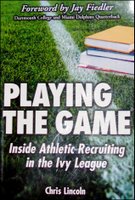 r it became that the problem was systemic. The irony is that the Ivy League isn’t “holier than thou” but “uglier than thou” when it comes to athletic recruiting. In terms of having athletes who are serious students, the Ivies are justifiably proud. But their recruiting system invites ugly behavior from coaches and administrators as well as from players and their parents.
Were there stories you didn't write to protect people and, if so, can you sketch one out in very general terms?
I was told things off the record that confirm my belief that the League needs to make reforms. How’s that for protecting my sources and some of the friendships I developed?
Have you heard from coaches and others in administration saying, essentially, thanks for shining a light where no light has shone before?
Yes, and it’s been very gratifying. It’s also funny because some of what I’ve heard on a positive note has been passed along in a rather hush-hush fashion or through a mutual friend. A number of coaches have told me directly that they think it’s a good book. Several have said, “I hope you mailed a copy to every Ivy president, so they can find out what’s really going on.” I’ve gotten a few calls from Ivy athletic directors, complimenting me. One said he thought I’d written a good book but not to quote him on that because “it’s too controversial.” To me, that captures the essence of the problem. People fear for their jobs, even high profile administrators who know the system is flawed, so they have to watch what they say. One of the best calls I got was from former Dartmouth AD, Seaver Peters. He’s a no-nonsense guy who tells it like it is, and when he said, “You did a great job—hit the nail right on the head,” I was very pleased. I’ve really appreciated all the support and compliments I’ve gotten from Ivy insiders.
Are you a persona non-grata on any Ivy League campuses since the book came out?
Well, I’ve said hello to Dartmouth AD Josie Harper a few times and she acts as if she doesn’t know me. I interviewed her for an hour. She knows my parents. In contrast, I chatted with (Dartmouth President) Jim Wright one day last fall, walking to a Dartmouth soccer game, and he was very pleasant. I was invited down to speak to a freshman seminar at Princeton, so I guess I’m welcome there. The book was required reading for the search committee members at Brown during their AD search a year ago. I was told that a few of the committee members from the Brown faculty and administration asked with surprise, “Is this all true?” Small-minded people in the League may be upset by what I wrote because they cannot accept criticism. They have this “how dare you!” attitude. It’s no secret the Ivy League likes to think of itself as superior, but in terms of recruiting it’s not.
Why doesn't the Ivy League recognize the letter of intent and should it?
The Council of Ivy Group Presidents cannot overcome the “pay for play” overtones of the NCAA letter of intent, which often involves an athletic scholarship for the senior high school athletes who sign the letter. This view is delusional, though, as some Ivy-bound athletes presently choose one Ivy over another based on need-based financial aid packages, which are often juicier at the better endowed schools—in particular Harvard, Princeton, and Yale. Fred Hargadon and Mike Goldberger, the former admission deans at Princeton and Brown, respectively, proposed that the Ivies adopt the letter of intent during their recent tenures, but the presidents shot them down. Karl Furstenberg, the Dartmouth admission dean, opposes the adoption of the letter of intent because he thinks “it’s exactly the wrong message for the Ivy League to send to all the high schools in America—that Larry Linebacker can hear from Dartmouth in a formal way that he’s in before Valerie Valedictorian can.” The reality, however, is that Larry Linebacker already does hear in a formal way that he’s into an Ivy League school before Valerie Valectorian, thanks to the Ivy likely letter.
You have to love the Ivy League. They talk a good game. But they want to have it both ways. They want to cloak themselves in sanctity, saying they treat athletes no differently than other students, while behind closed doors they treat athletes quite differently in the admission process. Not only can athletes learn ahead of time whether they’re going to get in, they can even get a written financial aid estimate from an Ivy school before they submit an application. How many kids from the general applicant pool can do that? It’s not sanctity, it’s hypocrisy.
What can you tell us about "likely letters?"
Likely letters are a one-way written commitment, mailed by Ivy deans of admission to high school seniors who have already made a verbal commitment to an Ivy coach to attend that Ivy school. The letter, which can be mailed at almost any date, confirms that the athletes are likely to be admitted come April. Likely letters originated because many Ivy athletes receive scholarship offers from non-Ivy schools and the League felt these potential students deserved to know where they stood before passing up a scholarship offer. I think that is a fair and reasonable thing to do. But the likely letters are also mailed to kids who do not get scholarship offers, and the abuses that stem from the likely letters and the pressure for athletes to make a verbal commitment to an Ivy coach need to be addressed. Jeff Orleans, the executive director of the Ivy League, confessed to me that he believes the NCAA letter of intent fosters greater integrity, honesty and morality than the Ivy likely letter, because “the likely letter is inviting problems the way it’s set up now.” The whole verbal commitment game gets very ugly on both sides of the ball. You hear about the coaches who abuse the system, but in fairness kids and their parents abuse it, too.
The bottom line is that athletes, because they are so highly valued by all colleges, not just by Ivy League schools, undergo their own separate and accelerated admission process. I believe there’s a way for the Ivy League to acknowledge that, while they openly and honestly pursue their goal of having high principles. I have proposed that they institute a letter of Ivy intent with a common signing date. By placing the emphasis on the word Ivy, the inherent message would be clear and forceful: athletes who signed it would be intent on pursuing an excellent education while playing their sport for passion, not for a scholarship.
Ivy coaches always talk about "no scholarships." Opposing coaches scoff and suggest that the "rich" Ivy schools are able to level out the field with their ability to give out lucrative financial aid. Who is right?
Financial aid in the Ivy League is need-based. There are no merit scholarships of any kind—athletic, academic, artistic. Schools within the League have different need-based financial aid policies, however, and these can, and do, affect how generous an aid package will be. Princeton eliminated student loans in the late 1990’s. Following that lead, Yale and Harvard have increased their grants as well, especially for students from low-income households. For an athlete who qualifies for a lot of need-based aid, the lack of any loans could save him or her $20,000 to $30,000 over four years (or even more, depending on how much grant-in-aid funds were available at another Ivy school in the recruiting battle). Everyone in the League acknowledges that the wealthier schools have an advantage.
What you hear from some coaches is that some Ivies will beef up an aid package for an athlete. Penn is reputed to give their football players a lot of financial aid. One football player who was being recruited by Dartmouth a few years ago received a full-ride offer from a scholarship school. Dartmouth could not match it, under its need-based guidelines. The difference was about $10,000. But according to the Dartmouth coach who told me the scenario, Penn did match the full-ride offer. This is impossible to prove one way or the other. You’re not going to get access to financial records like that. So the rumors and accusations will continue.
Can you envision a day when the Ivies actually give out athletic scholarships in a manner similar to the Patriot League? (Patriot League coaches suggest it raises the academic profile of the kids they are recruiting, allowing them to compete with the Ivies for the best and the brightest.)
No, this will never happen. Simply on economic terms, it’s a staggering sum of money to fund scholarships for 30-plus teams—over $250 million a year. And if you choose to give scholarships to players on just a few Ivy teams on these campuses, say to men’s basketball and men’s hockey, then you’re headed down a very slippery slope. Ivy principles aren’t going to allow that, ever. Finally, on philosophical terms, it’s hardly egalitarian to give a full-ride to a kid whose family can afford the full price of tuition when there are so many highly qualified students out there who need financial aid to attend an Ivy institution.
It’s easy to see why scholarships in the Patriot League are luring bright students who are good players away from the Ivy League, though. Skyrocketing tuition costs are threatening to eliminate the middle-class kid from Ivy rosters altogether. “Middle class families get screwed,” one Ivy coach told me. “They don’t qualify for enough aid, and yet they don’t earn enough money to afford $40,000 a year.” If you’re wealthy, you’re fine. If you’re low-income, your need-based package can amount to a full-ride, or close to it. But if you’re a middle-class kid and it’s a choice between a full-ride to a very good school and getting hit with $20,000 or more in student loans, on top of the burden your family will assume for four years, it’s easy to accept that scholarship. That’s why Ivy teams are increasingly composed of rich kids and poor kids and fewer and fewer middle-class kids. This trend will only get worse. Ultimately, I think it will make it harder for the Ivies to compete successfully outside their own league. And watch the Ivy basketball coaches leave for other jobs in the next few years. I’m told a few are already looking.
In your opinion, would the Ivy principles be compromised by giving scholarships to academica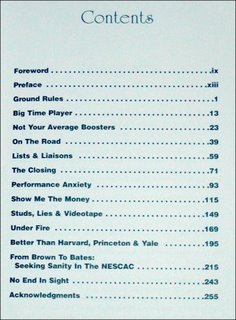 lly qualified student-athletes, and is there a right way to do it?
I see no need to give merit scholarships of any kind—athletic, academic, artistic—to any students in the Ivy League. I admire and applaud the League’s commitment to need-based financial aid. It’s absolutely the right way to go. If athletic standards begin to fall, the League can join Division III. (Do I hear a chorus opposing this option?)
The slide in Dartmouth's football fortunes coincided with the now infamous and well-documented letter written by the Dartmouth admissions director damning the culture of the sport and those who play it. Many people believe the admissions situation contributed significantly to the downturn in Dartmouth football's fortunes. Do you?
Yes, I do. But the person responsible for altering the Dartmouth football admission landscape was not Karl Furstenberg, the author of the damning letter to Swarthmore. It was the late Dartmouth president, James O. Freedman. To his credit, President Freedman was open about his mission to raise the academic profile of the Dartmouth student body and to create a more intellectually driven Dartmouth community (“the eggheads” as one Big Green football coach called them). Karl Furstenberg was hired by Freedman as a simpatico admission dean to help execute Freedman's over-arching goal to raise the academic bar and admit a more academically gifted student body. This was a seismic shift in overall school policy, not Furstenberg’s private agenda, and it was not simply an athletic admit issue, though it did affect the football program.
Ironically, the slide in Dartmouth’s football fortunes occurred the very same year that the Big Green enjoyed their last undefeated season, 1996. John Lyons told me he knew he was doomed that fall, just after that incredible 10-0 season, when he returned from Princeton and found Dartmouth’s new A.I. numbers on his desk. They had risen sharply, finally shifting (remember, they're based on a rolling four-year average, so it took a while to boost the school's mean AI to new heights under Freedman), and the numbers were so high that Dartmouth football was now competing for players on an equal footing with Harvard. There was no longer an A.I. band advantage for Dartmouth.
As for individual football admission decisions made within these new A.I. band parameters, Lyons and his staff were not always supported by Karl Furstenberg. But other coaches in other sports were also frustrated by the Dartmouth admission office at times. It’s part of the joy of coaching in the Ivy League. You bring forward a strong candidate for admission, with an A.I. that falls within the school’s range, place him high on your list, and then sit back and watch the kid get rejected.
Given they don't work in a vacuum, how important are the personal beliefs of the admissions director to the athletic fortunes of an Ivy League school?
Everyone gives Fred Hargadon, the dean of admission at Princeton, a lot of credit for Princeton’s record-setting pace of Ivy titles between 1990 and 2003. But Princeton also has outstanding facilities, terrific financial aid, excellent coaches, and arguably the League’s best athletic director, Gary Walters. So it wasn’t just Dean Hargadon who made many Tiger teams excellent. That said, coaches at Princeton knew Hargadon was interested in their kids and supportive of them. He regularly attended (and still attends) games, matches and meets in a slew of sports. He also attended (and attends) concerts, theater performances, and other non-athletic events, telling me, “I like to let the kids know I haven’t forgotten about them after admitting them.” Several Dartmouth coaches have told me they’ve never seen Karl Furstenberg at one of their contests. Yet he rarely misses a men’s ice hockey game. Such bias would be tricky for a coach, especially when the kids you put forth on your list are getting turned down while men’s hockey is getting plenty of support. Ivy coaches do get fired for losing. Ask Dave Faucher and John Lyons.
How much of an impact does the president of the school have?
(Current Dartmouth President Jim Wright is regarded as being much friendlier to athletics than his predecessor and, perhaps coincidentally, there's a good deal of movement in Dartmouth athletics these days.)
There’s no question Jim Wright has done his share of fence-mending between the admission office and the athletic department during his tenure as president. He’s made the goals clear to both parties and has asked them to work together and communicate more effectively. ... It will be interesting to see what Columbia does with its athletic program under its current president, Lee Bollinger, who came from academic and athletic powerhouse Michigan in 2002. He’s hired a new athletic director and she’s been hiring new coaches, who say they’ve come there to win. Will the Lions begin to roar in the athletic arena? Stay tuned….
My sense from talking with Jeff Orleans, the executive director of the Ivy League, and with Jim Wright, is that the Ivy presidents all have their own individual views on athletics and as a result it’s a tough group to speak on behalf of. Each Ivy president also has bigger fish to fry, so it’s tough to get them to focus on athletics. The final problem is that Ivy presidents turn over with some frequency, so when it comes time to discuss athletic policies there is often at least one new president to bring up to speed. And he or she can have his or her own strong feelings on the subject. As a result of this turnover and lack of inside knowledge, Jeff Orleans wields a good deal of influence and power. And yet, the presidents don’t always follow his recommendations, some of which would certainly improve recruiting ethics—or the lack thereof. In a way, the issue is this: can anyone tell the presidents of these schools anything?
I've heard a few coaches say this is the time to coach at Dartmouth because the admissions director is under tremendous scrutiny. Any truth to that?
I think Jim Wright has made it very clear that he supports Karl Furstenberg as an admission dean regardless of Furstenberg’s personal views. Football isn’t the only program to have frustrations with Dartmouth admissions over the past 10 years. But that frustration is part of the Ivy admission process. Each applicant is reviewed as an individual. There are no rubber stamps of approval in the Ivies, such as occur at a University of Virginia. Do Ivy coaches have to work to get along with their admission dean? Absolutely, that’s the game within the game. But Dave Roach, who was a very successful swimming coach at Brown before serving as their AD for many years (he’s now the AD at Colgate), offered a great perspective on Ivy coaching: “The interesting thing to me about the Ivy League is if you’re a good a coach and you have a successful program, the people on the outside won’t give you credit for being a good coach. They’ll say, ‘Oh, admissions have given him everything.’ Or, ‘Financial aid is helping him.’ You’re never given credit for being a good coach. It’s always, ‘Everybody did this for you.’” Well, this works in reverse as well. A losing coach can whine that admissions didn’t do anything for him or her. Sometimes it’s true; a key player gets turned away and winds up on another Ivy roster. But there are some very successful coaches at Dartmouth who don’t get every kid they want. For instance, Jeff Cook, the men’s soccer coach, has won three Ivy titles in four years, and he’s had top recruits turned down. He’s a very good coach with the ability to spot talent and develop winning teams.
What is the Academic Index supposed to do, and does it work?
The Academic Index (A.I.) is used to determine if an athlete’s academic standing is representative of an Ivy League institution’s student body as a whole. All entering Ivy League students are assigned an A.I., which is based on a mathematical formula—two-thirds test scores, one third class rank or GPA (if the high school doesn’t rank). Each school’s “mean” A.I. is based on a rolling four year average. The trouble with the A.I. is that it cannot measure intangibles (character, drive, ambition) and it discriminates against kids who either don’t test well or lack the financial resources to enroll in expensive test-prep courses. Under current Ivy rules, football is treated on its own, while all other Ivy sports must have a combined average A.I. for incoming recruits that is within one standard deviation of the mean A.I. of the whole school.
Is there something better?
I favor having an A.I. floor, under which no athlete can be admitted. After that, I support what the late Yale president A. Bartlett Giamatti wanted to do: let each school admit the class they want to admit. The trouble is, as coaches at several Ivy schools agreed, “Nobody trusts each other in this League.” So if a school starts winning, and there’s nothing regulating the admission of athletes, it’s because admissions has opened the doors too wide. Part of me wonders if the League has made the whole A.I. as complex as it is just to keep people from trying to unravel it. Your head can start spinning when you get into it, so the tendency is to throw up your hands and say, “Okay, whatever—nothing’s simple in the Ivy league.” But ultimately the schools need to become more transparent. They need to find the right way to treat athletes, not worry that they are being treated differently. Admit it and make it an ethical process.
A lot of posters on Internet message boards try to group the Ivy schools by admissions standards. Some will put Harvard, Princeton and Yale in one group, Columbia and Dartmouth in the next, and Brown, Penn and Cornell in a third group. How accurate is that, and if it's not, can you break the schools into three groups?
When I was researching my book back in 2003-2004, everyone I asked grouped the Ivy schools into three groups: Harvard, Princeton and Yale; Dartmouth close on their heels; then Columbia, Penn, Brown and Cornell. You’d have to check the most recent issue of the college marketing bible, US News & World Report, to get the latest rankings, but in the recruiting game, the top three Ivies enjoy a distinct advantage, especially with the parents of athletes. “We lose kids to Dartmouth and Penn,” one coach told me. “We lose parents to Harvard, Princeton and Yale.” Several Ivy people commented to me (and not for attribution) that there was a big difference between the academic quality of schools like Princeton, Harvard and Yale and some of the other Ivies lower on the scale. “It’s an athletic conference,” said one of these folks, “not an academic conference. It’s a big mistake to lump these schools equally on an academic basis. But of course the weaker schools love it.” Nothing like Ivy League snobbery, eh?
There have been numerous stories around Dartmouth about athletes turned down by Dartmouth but accepted at HYP and Columbia. Is it true the Dartmouth admissions director has said there's no truth to those stories? Have you heard any of those stories and if they are true, how does it happen?
I don’t know what Dean Furstenberg has said about the truth of these stories, but I do know of cases where players were rejected by Dartmouth and wound up at other Ivies—in one case at Columbia (as an Ivy Player of the Year in men’s basketball), in another case at Harvard (as a men’s soccer captain). I also know that a men’s soccer player was turned down at Dartmouth and went on to become a first team All-American at Stanford. Last year, a recruit was turned down by Dartmouth in early decision, and he’s now playing lacrosse at Yale. I’m sure there are other cases as well. This is not unique to Dartmouth, by the way. It happens across the Ivy League. Athletes are rejected by one school only to wind up on the roster of another school. Ivy admissions has been labeled “highly selective.” It might be more accurate to call it “highly subjective,” especially in athletic recruiting. I just heard about a Yale lacrosse recruit who was flown in to New Haven and welcomed to the Eli lacrosse family—only to get a rejection letter in the mail two days later. It really makes you wonder what’s going on. How does this happen?
Is it true that at some schools, a student-athlete who fits in an AI "band" is all but guaranteed admissions by the numbers while at other schools (Dartmouth being one) a good deal more subjective criteria are taken into account and student-athletes who qualify numerically are regularly turned down?
That’s a complaint you hear from Dartmouth coaches, especially about schools lower on the Ivy totem pole, such as Brown, Cornell or Penn. But I heard it from a Cornell coach, who was critical of other schools for taking kids based on their numbers, while she had to wait for her admission office to review a recruit’s entire folder. And I know of a case at Brown where a coach was told “don’t bother” to recruit a kid based on the A.I. numbers, and the player wound up as an all-Ivy performer at Dartmouth. In football, a few Ivy coaches admitted to me that they sometimes fill higher A.I. bands with players they know will never see playing time for them. But they have to fill the bands to meet their A.I. average, so they recruit these kids. More often than not, these players quit the team—what’s known as “attrition” in the Ivy athletic lexicon. The whole numeric system is deeply flawed. There should definitely be an A.I. floor, but placing kids in bands, or having a school average A.I. for athletes, is a mistake.
If you think about it, the whole A.I. is really a double-edged sword. It eliminates kids while at the same time having a numerical basis makes it hard for the admission office to reject recruits who meet the numbers. Coaches argue, “Hey, he meets the numbers. He’s within the criteria. I’m doing what you’ve asked, why won’t you let him in?” But you can have a smart kid who tests well, yet his transcript shows he’s basically lazy—B’s in non-AP courses. He’s got a decent GPA, very good boards, so his A.I. is strong, and the coach wants him. But admissions says, “Wait a minute. This guy’s underachieving in the classroom. And he did a cursory job filling out his application, his recommendations are average, so we don’t want him.” When that happens, it pisses off the coach because the recruit’s A.I. met the criteria. But the A.I. is not meant to serve as the ultimate measure, the application is. So the system, while based on a numerical formula, is hardly cut and dried. In fact, you could say it’s even more complicated because of the A.I. and the averaging that must take place to conform to League rules.
Dartmouth is in the midst of an incredible building boom regarding athletic facilities. How important do you think facilities are to Ivy League student-athletes?
I think they’re very important to every Ivy athlete, and I also think good facilities are vital for other students who are not varsity athletes—who want to exercise, play intramurals, stay fit. It’s great to see Dartmouth making that effort across the board. Will they ever equal the facilities at Princeton? No, but at least they are putting themselves back in the game.
Your book counters but in other ways confirms some of the findings Bill Bowen published in the Game of Life and its successor. Have you heard from Bowen and what's your take on his findings now that you've dug into the Game yourself?
I have never heard from Dr. Bowen. He avoided my interview requests as I researched my book, and he hasn’t called me to chat since its publication (laughs). I’m not a statistician and cannot address all his findings on that level. Others who are more qualified than I am have questioned his methodology and many of his conclusions. Perhaps the best description of Bowen’s statistical analysis of the academic underperformance of Ivy League athletes is that he has “exaggerated small differences.” For instance, the underperformance he cites of Princeton athletes (based on their test scores and grades) amounts on average to a 3.2 GPA when comparably qualified students earn a 3.6—or, a B+ instead of an A-. I think it’s pretty clear from what’s he’s written that he carries a deep prejudice against athletes. In a previous book he wrote with then-Harvard president Derek Bok, The Shape of the River, about minority admissions, Bowen makes the exact opposite argument that he makes in The Game of Life. In The Shape of the River he and Bok argue that test scores and grades alone are not accurate predictors of a minority student’s potential or merit, and should not used to determine a student’s worthiness for admission. Yet in The Game of Life those are the basis of his argument. Further, he and Bok write: “…it is not clear that students with higher grades and scores have necessarily worked harder.” The double standard is quite clear, and Bowen’s politically-correct, anti-athlete bias, is alarming. He’s feeding a stereotype which is grossly unfair.
I do agree with Bowen on one thing, however, and that is the danger of athletes at these elite schools devoting so much time to their sport and spending so much time with their teammates that they are living increasingly narrow lives in the midst of these extraordinary campuses.
What is the biggest myth about Ivy League athletics?
That all the athletes got in just because they are good at their sport. The majority of these kids are very hard working students, and many are quite talented academically, not just gifted athletically.
Are you working on anything interesting now?
I am working on a novel set on the West Bank, where I lived and worked on an Israeli settlement years ago. Much of the story is written. Now I’m doing research that will allow me to set the story in the present day. It’s a subject not unlike Ivy recruiting and athletics—in the sense that people hear a lot about the West Bank and the settlements there, but they don’t know the inside reality of what it’s actually like to live there, how settlers vary in their views, how politics and power influence even the smallest actions. Thanks to living there, I have the inside knowledge. I've got a good story and some compelling characters. Now all I need is an editor and publisher to take an interest, offer me an advance, and say, “Let’s go.”
Where can people get your book?
They can order directly from the publisher, Nomad Press, by visiting their website, or by calling 802-649-1995. Or they can go to amazon.com and support billionaire Princeton alum Jeff Bezos, who also sells used copies of the book that return no royalty payment to the author. I recommend Nomad. Thanks for asking.
Chris Lincoln, a former recruited athlete and dean’s list student at Middlebury College, is the author of PLAYING THE GAME: Inside Athletic Recruiting in the Ivy League, published in 2004 by Nomad Press. Chris, who just appeared on Rick Wolff's WFAN radio show The Sports Edge, generously took the time recently for this exclusive Q&A with Green Alert. (In the interest of full disclosure, I should mention that I met several times to talk with Chris about the book and traded numerous emails with him regarding issues he wrote about.)
The Ivy League can come across a little holier-than-thou with regard to recruiting. In your research for Playing the Game, how surprised were you with what you found, and did some of the stories you heard take you aback?
I was quite surprised with what I found, and the more people I spoke with, the cleare
 r it became that the problem was systemic. The irony is that the Ivy League isn’t “holier than thou” but “uglier than thou” when it comes to athletic recruiting. In terms of having athletes who are serious students, the Ivies are justifiably proud. But their recruiting system invites ugly behavior from coaches and administrators as well as from players and their parents.
Were there stories you didn't write to protect people and, if so, can you sketch one out in very general terms?
I was told things off the record that confirm my belief that the League needs to make reforms. How’s that for protecting my sources and some of the friendships I developed?
Have you heard from coaches and others in administration saying, essentially, thanks for shining a light where no light has shone before?
Yes, and it’s been very gratifying. It’s also funny because some of what I’ve heard on a positive note has been passed along in a rather hush-hush fashion or through a mutual friend. A number of coaches have told me directly that they think it’s a good book. Several have said, “I hope you mailed a copy to every Ivy president, so they can find out what’s really going on.” I’ve gotten a few calls from Ivy athletic directors, complimenting me. One said he thought I’d written a good book but not to quote him on that because “it’s too controversial.” To me, that captures the essence of the problem. People fear for their jobs, even high profile administrators who know the system is flawed, so they have to watch what they say. One of the best calls I got was from former Dartmouth AD, Seaver Peters. He’s a no-nonsense guy who tells it like it is, and when he said, “You did a great job—hit the nail right on the head,” I was very pleased. I’ve really appreciated all the support and compliments I’ve gotten from Ivy insiders.
Are you a persona non-grata on any Ivy League campuses since the book came out?
Well, I’ve said hello to Dartmouth AD Josie Harper a few times and she acts as if she doesn’t know me. I interviewed her for an hour. She knows my parents. In contrast, I chatted with (Dartmouth President) Jim Wright one day last fall, walking to a Dartmouth soccer game, and he was very pleasant. I was invited down to speak to a freshman seminar at Princeton, so I guess I’m welcome there. The book was required reading for the search committee members at Brown during their AD search a year ago. I was told that a few of the committee members from the Brown faculty and administration asked with surprise, “Is this all true?” Small-minded people in the League may be upset by what I wrote because they cannot accept criticism. They have this “how dare you!” attitude. It’s no secret the Ivy League likes to think of itself as superior, but in terms of recruiting it’s not.
Why doesn't the Ivy League recognize the letter of intent and should it?
The Council of Ivy Group Presidents cannot overcome the “pay for play” overtones of the NCAA letter of intent, which often involves an athletic scholarship for the senior high school athletes who sign the letter. This view is delusional, though, as some Ivy-bound athletes presently choose one Ivy over another based on need-based financial aid packages, which are often juicier at the better endowed schools—in particular Harvard, Princeton, and Yale. Fred Hargadon and Mike Goldberger, the former admission deans at Princeton and Brown, respectively, proposed that the Ivies adopt the letter of intent during their recent tenures, but the presidents shot them down. Karl Furstenberg, the Dartmouth admission dean, opposes the adoption of the letter of intent because he thinks “it’s exactly the wrong message for the Ivy League to send to all the high schools in America—that Larry Linebacker can hear from Dartmouth in a formal way that he’s in before Valerie Valedictorian can.” The reality, however, is that Larry Linebacker already does hear in a formal way that he’s into an Ivy League school before Valerie Valectorian, thanks to the Ivy likely letter.
You have to love the Ivy League. They talk a good game. But they want to have it both ways. They want to cloak themselves in sanctity, saying they treat athletes no differently than other students, while behind closed doors they treat athletes quite differently in the admission process. Not only can athletes learn ahead of time whether they’re going to get in, they can even get a written financial aid estimate from an Ivy school before they submit an application. How many kids from the general applicant pool can do that? It’s not sanctity, it’s hypocrisy.
What can you tell us about "likely letters?"
Likely letters are a one-way written commitment, mailed by Ivy deans of admission to high school seniors who have already made a verbal commitment to an Ivy coach to attend that Ivy school. The letter, which can be mailed at almost any date, confirms that the athletes are likely to be admitted come April. Likely letters originated because many Ivy athletes receive scholarship offers from non-Ivy schools and the League felt these potential students deserved to know where they stood before passing up a scholarship offer. I think that is a fair and reasonable thing to do. But the likely letters are also mailed to kids who do not get scholarship offers, and the abuses that stem from the likely letters and the pressure for athletes to make a verbal commitment to an Ivy coach need to be addressed. Jeff Orleans, the executive director of the Ivy League, confessed to me that he believes the NCAA letter of intent fosters greater integrity, honesty and morality than the Ivy likely letter, because “the likely letter is inviting problems the way it’s set up now.” The whole verbal commitment game gets very ugly on both sides of the ball. You hear about the coaches who abuse the system, but in fairness kids and their parents abuse it, too.
The bottom line is that athletes, because they are so highly valued by all colleges, not just by Ivy League schools, undergo their own separate and accelerated admission process. I believe there’s a way for the Ivy League to acknowledge that, while they openly and honestly pursue their goal of having high principles. I have proposed that they institute a letter of Ivy intent with a common signing date. By placing the emphasis on the word Ivy, the inherent message would be clear and forceful: athletes who signed it would be intent on pursuing an excellent education while playing their sport for passion, not for a scholarship.
Ivy coaches always talk about "no scholarships." Opposing coaches scoff and suggest that the "rich" Ivy schools are able to level out the field with their ability to give out lucrative financial aid. Who is right?
Financial aid in the Ivy League is need-based. There are no merit scholarships of any kind—athletic, academic, artistic. Schools within the League have different need-based financial aid policies, however, and these can, and do, affect how generous an aid package will be. Princeton eliminated student loans in the late 1990’s. Following that lead, Yale and Harvard have increased their grants as well, especially for students from low-income households. For an athlete who qualifies for a lot of need-based aid, the lack of any loans could save him or her $20,000 to $30,000 over four years (or even more, depending on how much grant-in-aid funds were available at another Ivy school in the recruiting battle). Everyone in the League acknowledges that the wealthier schools have an advantage.
What you hear from some coaches is that some Ivies will beef up an aid package for an athlete. Penn is reputed to give their football players a lot of financial aid. One football player who was being recruited by Dartmouth a few years ago received a full-ride offer from a scholarship school. Dartmouth could not match it, under its need-based guidelines. The difference was about $10,000. But according to the Dartmouth coach who told me the scenario, Penn did match the full-ride offer. This is impossible to prove one way or the other. You’re not going to get access to financial records like that. So the rumors and accusations will continue.
Can you envision a day when the Ivies actually give out athletic scholarships in a manner similar to the Patriot League? (Patriot League coaches suggest it raises the academic profile of the kids they are recruiting, allowing them to compete with the Ivies for the best and the brightest.)
No, this will never happen. Simply on economic terms, it’s a staggering sum of money to fund scholarships for 30-plus teams—over $250 million a year. And if you choose to give scholarships to players on just a few Ivy teams on these campuses, say to men’s basketball and men’s hockey, then you’re headed down a very slippery slope. Ivy principles aren’t going to allow that, ever. Finally, on philosophical terms, it’s hardly egalitarian to give a full-ride to a kid whose family can afford the full price of tuition when there are so many highly qualified students out there who need financial aid to attend an Ivy institution.
It’s easy to see why scholarships in the Patriot League are luring bright students who are good players away from the Ivy League, though. Skyrocketing tuition costs are threatening to eliminate the middle-class kid from Ivy rosters altogether. “Middle class families get screwed,” one Ivy coach told me. “They don’t qualify for enough aid, and yet they don’t earn enough money to afford $40,000 a year.” If you’re wealthy, you’re fine. If you’re low-income, your need-based package can amount to a full-ride, or close to it. But if you’re a middle-class kid and it’s a choice between a full-ride to a very good school and getting hit with $20,000 or more in student loans, on top of the burden your family will assume for four years, it’s easy to accept that scholarship. That’s why Ivy teams are increasingly composed of rich kids and poor kids and fewer and fewer middle-class kids. This trend will only get worse. Ultimately, I think it will make it harder for the Ivies to compete successfully outside their own league. And watch the Ivy basketball coaches leave for other jobs in the next few years. I’m told a few are already looking.
In your opinion, would the Ivy principles be compromised by giving scholarships to academica
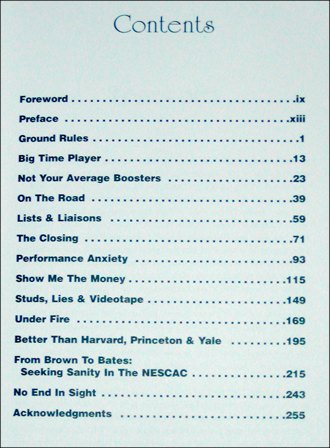 lly qualified student-athletes, and is there a right way to do it?
I see no need to give merit scholarships of any kind—athletic, academic, artistic—to any students in the Ivy League. I admire and applaud the League’s commitment to need-based financial aid. It’s absolutely the right way to go. If athletic standards begin to fall, the League can join Division III. (Do I hear a chorus opposing this option?)
The slide in Dartmouth's football fortunes coincided with the now infamous and well-documented letter written by the Dartmouth admissions director damning the culture of the sport and those who play it. Many people believe the admissions situation contributed significantly to the downturn in Dartmouth football's fortunes. Do you?
Yes, I do. But the person responsible for altering the Dartmouth football admission landscape was not Karl Furstenberg, the author of the damning letter to Swarthmore. It was the late Dartmouth president, James O. Freedman. To his credit, President Freedman was open about his mission to raise the academic profile of the Dartmouth student body and to create a more intellectually driven Dartmouth community (“the eggheads” as one Big Green football coach called them). Karl Furstenberg was hired by Freedman as a simpatico admission dean to help execute Freedman's over-arching goal to raise the academic bar and admit a more academically gifted student body. This was a seismic shift in overall school policy, not Furstenberg’s private agenda, and it was not simply an athletic admit issue, though it did affect the football program.
Ironically, the slide in Dartmouth’s football fortunes occurred the very same year that the Big Green enjoyed their last undefeated season, 1996. John Lyons told me he knew he was doomed that fall, just after that incredible 10-0 season, when he returned from Princeton and found Dartmouth’s new A.I. numbers on his desk. They had risen sharply, finally shifting (remember, they're based on a rolling four-year average, so it took a while to boost the school's mean AI to new heights under Freedman), and the numbers were so high that Dartmouth football was now competing for players on an equal footing with Harvard. There was no longer an A.I. band advantage for Dartmouth.
As for individual football admission decisions made within these new A.I. band parameters, Lyons and his staff were not always supported by Karl Furstenberg. But other coaches in other sports were also frustrated by the Dartmouth admission office at times. It’s part of the joy of coaching in the Ivy League. You bring forward a strong candidate for admission, with an A.I. that falls within the school’s range, place him high on your list, and then sit back and watch the kid get rejected.
Given they don't work in a vacuum, how important are the personal beliefs of the admissions director to the athletic fortunes of an Ivy League school?
Everyone gives Fred Hargadon, the dean of admission at Princeton, a lot of credit for Princeton’s record-setting pace of Ivy titles between 1990 and 2003. But Princeton also has outstanding facilities, terrific financial aid, excellent coaches, and arguably the League’s best athletic director, Gary Walters. So it wasn’t just Dean Hargadon who made many Tiger teams excellent. That said, coaches at Princeton knew Hargadon was interested in their kids and supportive of them. He regularly attended (and still attends) games, matches and meets in a slew of sports. He also attended (and attends) concerts, theater performances, and other non-athletic events, telling me, “I like to let the kids know I haven’t forgotten about them after admitting them.” Several Dartmouth coaches have told me they’ve never seen Karl Furstenberg at one of their contests. Yet he rarely misses a men’s ice hockey game. Such bias would be tricky for a coach, especially when the kids you put forth on your list are getting turned down while men’s hockey is getting plenty of support. Ivy coaches do get fired for losing. Ask Dave Faucher and John Lyons.
How much of an impact does the president of the school have?
(Current Dartmouth President Jim Wright is regarded as being much friendlier to athletics than his predecessor and, perhaps coincidentally, there's a good deal of movement in Dartmouth athletics these days.)
There’s no question Jim Wright has done his share of fence-mending between the admission office and the athletic department during his tenure as president. He’s made the goals clear to both parties and has asked them to work together and communicate more effectively. ... It will be interesting to see what Columbia does with its athletic program under its current president, Lee Bollinger, who came from academic and athletic powerhouse Michigan in 2002. He’s hired a new athletic director and she’s been hiring new coaches, who say they’ve come there to win. Will the Lions begin to roar in the athletic arena? Stay tuned….
My sense from talking with Jeff Orleans, the executive director of the Ivy League, and with Jim Wright, is that the Ivy presidents all have their own individual views on athletics and as a result it’s a tough group to speak on behalf of. Each Ivy president also has bigger fish to fry, so it’s tough to get them to focus on athletics. The final problem is that Ivy presidents turn over with some frequency, so when it comes time to discuss athletic policies there is often at least one new president to bring up to speed. And he or she can have his or her own strong feelings on the subject. As a result of this turnover and lack of inside knowledge, Jeff Orleans wields a good deal of influence and power. And yet, the presidents don’t always follow his recommendations, some of which would certainly improve recruiting ethics—or the lack thereof. In a way, the issue is this: can anyone tell the presidents of these schools anything?
I've heard a few coaches say this is the time to coach at Dartmouth because the admissions director is under tremendous scrutiny. Any truth to that?
I think Jim Wright has made it very clear that he supports Karl Furstenberg as an admission dean regardless of Furstenberg’s personal views. Football isn’t the only program to have frustrations with Dartmouth admissions over the past 10 years. But that frustration is part of the Ivy admission process. Each applicant is reviewed as an individual. There are no rubber stamps of approval in the Ivies, such as occur at a University of Virginia. Do Ivy coaches have to work to get along with their admission dean? Absolutely, that’s the game within the game. But Dave Roach, who was a very successful swimming coach at Brown before serving as their AD for many years (he’s now the AD at Colgate), offered a great perspective on Ivy coaching: “The interesting thing to me about the Ivy League is if you’re a good a coach and you have a successful program, the people on the outside won’t give you credit for being a good coach. They’ll say, ‘Oh, admissions have given him everything.’ Or, ‘Financial aid is helping him.’ You’re never given credit for being a good coach. It’s always, ‘Everybody did this for you.’” Well, this works in reverse as well. A losing coach can whine that admissions didn’t do anything for him or her. Sometimes it’s true; a key player gets turned away and winds up on another Ivy roster. But there are some very successful coaches at Dartmouth who don’t get every kid they want. For instance, Jeff Cook, the men’s soccer coach, has won three Ivy titles in four years, and he’s had top recruits turned down. He’s a very good coach with the ability to spot talent and develop winning teams.
What is the Academic Index supposed to do, and does it work?
The Academic Index (A.I.) is used to determine if an athlete’s academic standing is representative of an Ivy League institution’s student body as a whole. All entering Ivy League students are assigned an A.I., which is based on a mathematical formula—two-thirds test scores, one third class rank or GPA (if the high school doesn’t rank). Each school’s “mean” A.I. is based on a rolling four year average. The trouble with the A.I. is that it cannot measure intangibles (character, drive, ambition) and it discriminates against kids who either don’t test well or lack the financial resources to enroll in expensive test-prep courses. Under current Ivy rules, football is treated on its own, while all other Ivy sports must have a combined average A.I. for incoming recruits that is within one standard deviation of the mean A.I. of the whole school.
Is there something better?
I favor having an A.I. floor, under which no athlete can be admitted. After that, I support what the late Yale president A. Bartlett Giamatti wanted to do: let each school admit the class they want to admit. The trouble is, as coaches at several Ivy schools agreed, “Nobody trusts each other in this League.” So if a school starts winning, and there’s nothing regulating the admission of athletes, it’s because admissions has opened the doors too wide. Part of me wonders if the League has made the whole A.I. as complex as it is just to keep people from trying to unravel it. Your head can start spinning when you get into it, so the tendency is to throw up your hands and say, “Okay, whatever—nothing’s simple in the Ivy league.” But ultimately the schools need to become more transparent. They need to find the right way to treat athletes, not worry that they are being treated differently. Admit it and make it an ethical process.
A lot of posters on Internet message boards try to group the Ivy schools by admissions standards. Some will put Harvard, Princeton and Yale in one group, Columbia and Dartmouth in the next, and Brown, Penn and Cornell in a third group. How accurate is that, and if it's not, can you break the schools into three groups?
When I was researching my book back in 2003-2004, everyone I asked grouped the Ivy schools into three groups: Harvard, Princeton and Yale; Dartmouth close on their heels; then Columbia, Penn, Brown and Cornell. You’d have to check the most recent issue of the college marketing bible, US News & World Report, to get the latest rankings, but in the recruiting game, the top three Ivies enjoy a distinct advantage, especially with the parents of athletes. “We lose kids to Dartmouth and Penn,” one coach told me. “We lose parents to Harvard, Princeton and Yale.” Several Ivy people commented to me (and not for attribution) that there was a big difference between the academic quality of schools like Princeton, Harvard and Yale and some of the other Ivies lower on the scale. “It’s an athletic conference,” said one of these folks, “not an academic conference. It’s a big mistake to lump these schools equally on an academic basis. But of course the weaker schools love it.” Nothing like Ivy League snobbery, eh?
There have been numerous stories around Dartmouth about athletes turned down by Dartmouth but accepted at HYP and Columbia. Is it true the Dartmouth admissions director has said there's no truth to those stories? Have you heard any of those stories and if they are true, how does it happen?
I don’t know what Dean Furstenberg has said about the truth of these stories, but I do know of cases where players were rejected by Dartmouth and wound up at other Ivies—in one case at Columbia (as an Ivy Player of the Year in men’s basketball), in another case at Harvard (as a men’s soccer captain). I also know that a men’s soccer player was turned down at Dartmouth and went on to become a first team All-American at Stanford. Last year, a recruit was turned down by Dartmouth in early decision, and he’s now playing lacrosse at Yale. I’m sure there are other cases as well. This is not unique to Dartmouth, by the way. It happens across the Ivy League. Athletes are rejected by one school only to wind up on the roster of another school. Ivy admissions has been labeled “highly selective.” It might be more accurate to call it “highly subjective,” especially in athletic recruiting. I just heard about a Yale lacrosse recruit who was flown in to New Haven and welcomed to the Eli lacrosse family—only to get a rejection letter in the mail two days later. It really makes you wonder what’s going on. How does this happen?
Is it true that at some schools, a student-athlete who fits in an AI "band" is all but guaranteed admissions by the numbers while at other schools (Dartmouth being one) a good deal more subjective criteria are taken into account and student-athletes who qualify numerically are regularly turned down?
That’s a complaint you hear from Dartmouth coaches, especially about schools lower on the Ivy totem pole, such as Brown, Cornell or Penn. But I heard it from a Cornell coach, who was critical of other schools for taking kids based on their numbers, while she had to wait for her admission office to review a recruit’s entire folder. And I know of a case at Brown where a coach was told “don’t bother” to recruit a kid based on the A.I. numbers, and the player wound up as an all-Ivy performer at Dartmouth. In football, a few Ivy coaches admitted to me that they sometimes fill higher A.I. bands with players they know will never see playing time for them. But they have to fill the bands to meet their A.I. average, so they recruit these kids. More often than not, these players quit the team—what’s known as “attrition” in the Ivy athletic lexicon. The whole numeric system is deeply flawed. There should definitely be an A.I. floor, but placing kids in bands, or having a school average A.I. for athletes, is a mistake.
If you think about it, the whole A.I. is really a double-edged sword. It eliminates kids while at the same time having a numerical basis makes it hard for the admission office to reject recruits who meet the numbers. Coaches argue, “Hey, he meets the numbers. He’s within the criteria. I’m doing what you’ve asked, why won’t you let him in?” But you can have a smart kid who tests well, yet his transcript shows he’s basically lazy—B’s in non-AP courses. He’s got a decent GPA, very good boards, so his A.I. is strong, and the coach wants him. But admissions says, “Wait a minute. This guy’s underachieving in the classroom. And he did a cursory job filling out his application, his recommendations are average, so we don’t want him.” When that happens, it pisses off the coach because the recruit’s A.I. met the criteria. But the A.I. is not meant to serve as the ultimate measure, the application is. So the system, while based on a numerical formula, is hardly cut and dried. In fact, you could say it’s even more complicated because of the A.I. and the averaging that must take place to conform to League rules.
Dartmouth is in the midst of an incredible building boom regarding athletic facilities. How important do you think facilities are to Ivy League student-athletes?
I think they’re very important to every Ivy athlete, and I also think good facilities are vital for other students who are not varsity athletes—who want to exercise, play intramurals, stay fit. It’s great to see Dartmouth making that effort across the board. Will they ever equal the facilities at Princeton? No, but at least they are putting themselves back in the game.
Your book counters but in other ways confirms some of the findings Bill Bowen published in the Game of Life and its successor. Have you heard from Bowen and what's your take on his findings now that you've dug into the Game yourself?
I have never heard from Dr. Bowen. He avoided my interview requests as I researched my book, and he hasn’t called me to chat since its publication (laughs). I’m not a statistician and cannot address all his findings on that level. Others who are more qualified than I am have questioned his methodology and many of his conclusions. Perhaps the best description of Bowen’s statistical analysis of the academic underperformance of Ivy League athletes is that he has “exaggerated small differences.” For instance, the underperformance he cites of Princeton athletes (based on their test scores and grades) amounts on average to a 3.2 GPA when comparably qualified students earn a 3.6—or, a B+ instead of an A-. I think it’s pretty clear from what’s he’s written that he carries a deep prejudice against athletes. In a previous book he wrote with then-Harvard president Derek Bok, The Shape of the River, about minority admissions, Bowen makes the exact opposite argument that he makes in The Game of Life. In The Shape of the River he and Bok argue that test scores and grades alone are not accurate predictors of a minority student’s potential or merit, and should not used to determine a student’s worthiness for admission. Yet in The Game of Life those are the basis of his argument. Further, he and Bok write: “…it is not clear that students with higher grades and scores have necessarily worked harder.” The double standard is quite clear, and Bowen’s politically-correct, anti-athlete bias, is alarming. He’s feeding a stereotype which is grossly unfair.
I do agree with Bowen on one thing, however, and that is the danger of athletes at these elite schools devoting so much time to their sport and spending so much time with their teammates that they are living increasingly narrow lives in the midst of these extraordinary campuses.
What is the biggest myth about Ivy League athletics?
That all the athletes got in just because they are good at their sport. The majority of these kids are very hard working students, and many are quite talented academically, not just gifted athletically.
Are you working on anything interesting now?
I am working on a novel set on the West Bank, where I lived and worked on an Israeli settlement years ago. Much of the story is written. Now I’m doing research that will allow me to set the story in the present day. It’s a subject not unlike Ivy recruiting and athletics—in the sense that people hear a lot about the West Bank and the settlements there, but they don’t know the inside reality of what it’s actually like to live there, how settlers vary in their views, how politics and power influence even the smallest actions. Thanks to living there, I have the inside knowledge. I've got a good story and some compelling characters. Now all I need is an editor and publisher to take an interest, offer me an advance, and say, “Let’s go.”
Where can people get your book?
They can order directly from the publisher, Nomad Press, by visiting their website, or by calling 802-649-1995. Or they can go to amazon.com and support billionaire Princeton alum Jeff Bezos, who also sells used copies of the book that return no royalty payment to the author. I recommend Nomad. Thanks for asking.
I-A, I-AA Labels to be Replaced?
Matt Dougherty, who interned in the sports information office at Dartmouth and now does a fine job as executive director of I-AA football for The Sports Network, has a long, long column that addresses imminent and not-so-imminent changes in Division I-A and I-AA football. Perhaps the most interesting change on the surface is the expected renaming of the categories of Division I football. If I'm reading this long column (did I mention it was long?) correctly, Matt and others expect -- and Matt encourages --the I-A teams being labeled Division I's "Bowl Division" and I-AA being labeled the "Playoff Division." Green Alert Take: This change could be just what those hoping to put heat on the Ivy presidents regarding postseason play have been waiting for. I propose they offer to auction off naming rights to a third label exclusively for Ivy teams: Imagine the "Wal-Mart No Playoff Division" title for sale.
Former Dartmouth coach John Lyons got his second win as defensive coordinator for Cologne of NFL Europe over the weekend as the Centurions handled Hamburg, 20-17. ... The Washington Post has a nice story about Brown's Nick Hartigan. The big running back says that while he's been told he could be a sixth- or seventh-round draft pick he's just hoping to get into an NFL camp and prove himself.
Check back in a little bit for the Q&A with Chris Lincoln, author of Playing the Game, Inside Athletic Recruiting in the Ivy League.
Former Dartmouth coach John Lyons got his second win as defensive coordinator for Cologne of NFL Europe over the weekend as the Centurions handled Hamburg, 20-17. ... The Washington Post has a nice story about Brown's Nick Hartigan. The big running back says that while he's been told he could be a sixth- or seventh-round draft pick he's just hoping to get into an NFL camp and prove himself.
Check back in a little bit for the Q&A with Chris Lincoln, author of Playing the Game, Inside Athletic Recruiting in the Ivy League.
Monday, April 24, 2006
Monday, April 24 Practice
By Bruce Wood
www.biggreenalert.com
Hanover -- Monday's Dartmouth spring football practice was uppers only, but that didn't mean there wasn't occasional hitting. One of the best hits was from a surprise source wearing No. 6.
Casey Frost, who shared quarterbacking duties with the Big Green junior varsity last fall, laid the lumber on a running back while wearing a different number and playing a different position.
"We are a little thin at the safety position and Frosty is an athletic guy so we asked him to take a look at the other side of the ball," Dartmouth coach Buddy Teevens said. "He was very receptive. He played there in high school and we've been very, very pleased by what he's shown us.
"You saw how he lit up (tailback) Milan Williams today, so he's not afraid to hit you. He scrimmaged (at safety) Saturday and we like what we've seen from him."
Frost and outside linebacker-turned-tail back Julian Collins are just two of several players who changed positions this spring.
Tackle Mike Shannon is getting work at center and linebacker Ryan Mahoney is working at fullback.
"We've had a few guys switch positions, all to the benefit of our football team," Teevens said. "We moved Mike Shannon, with Taylor Layman being out, and I wouldn't say Mike has surprised us, but that it's been wonderful to see how he's adjusted. We certainly know what he can do outside, but this gives us a chance to solidify the front by giving Ben Goeke, Preson Copley, Alex Rapp and Lucius Alexander -- guys who need it -- more reps.
"Mahoney has adjusted very, very well at fullback. He's a smart guy and a physical guy. He even caught a touchdown pass on Saturday."
Saturday Notes
By Teevens' count, the Big Green went live for about 18 plays during its first true scrimmaging of the spring.
"It was competitive," the coach said. "The offensive line has progressed. We still need to be consistent. Defensively it was our first time tackling and we need to improve in that area but I was impressed with the way the guys flew around on both sides."
Teevens also liked what he saw from placekicker Erik Estabrook and punter Brian Scullin Saturday.
"We had a PAT/field goal opportunity," Teevens said. "Estabrook was consistent on the PAT's. He had one long-range 37-yarder that he missed but he is progressing. And I really do like what Scullin is doing. It's nice to have two guys who will be together for four years making some progress."
Quarterback Shuffle
Sophomore Tom Bennewitz got a look with the first team Monday with incumbent starter Josh Cohen working mostly with the second unit.
Bennewitz showed his accuracy and arm strength once again on down-field throws, the prettiest being a deep out that fell softly into the arms of speedy Brian Evans down the right sideline.
"Bennewitz is probably our best deep-ball thrower right now," Teevens said. "He's been working at it. I'm juggling the QB's a bit right now and have him working with the one's and Cohen with the two's. (Mike) Fritz is with the three's, based on the performance Saturday.
"We need the QB's to do the right thing all the time. Consistency is the key. Saturday we had a couple picks. Poor throws and poor decisions. We're opening it up enough that guys are going to have the opportunity to show what they are capable of doing."
Monday's Notables
Among those players who stood out at Monday's practice were safety John Pircon, tailback Hudson Smythe and receiver Phil Galligan.
Pircon had two nifty pass breakups in the middle of the field and another he nearly picked off. "Talking with (defensive backs coach) Sam McCorkle, Pircon has really progressed," said Teevens. "His comfort level on the back end is much greater. He's seeing things and has good vision of the field. I've been real pleased by the way he's performed."
The 6-foot-3, 200-pound Smythe picked up where he left off in the scrimmage, impressing Teevens with his running."He made some plays on Saturday that caught everyone's eye. He's been consistent. He's picking things up. He missed a good part of the year with ankle injury but it was fun to watch him work.
Galligan made the catch of the day, going up in the air in the middle of the field to reach back and pull in an off-target throw before tumbling to the field.
"He can do some things," Teevens said. "He can catch the football. He runs well. He's run some screens effectively for us. It's just about consistency with the offense. He didn't play a bunch last year but he's a guy who is pushing everybody right now."
All in all, Teevens was pleased once again.
"The guys look to be having fun," he said. "The pace of practice is really different this spring. They know what to do and they are doing a good job."
Notables II
Teevens: "Eddie Tabasky on the offensive line is really coming on. Dustin Adkins, for not having competed a year ago, is really making progress on the line and so is Alex Rapp, another guy that was out with an ankle injury. Tight end Brett Lowe has been very consistent. He had about six catches on Saturday. Mark Brogna has been performing well there also.
"At linebacker, Justin Cottrell is doing a good job. Joe Battaglia having been out for a year is coming along. Joe Gibalski, who had been injured, got a couple of snaps Saturday. John Manning has done a nice job at corner and so has Chris Blanco."
Coming Up
There will be some hitting Wednesday, a lighter practice on Friday and more extensive hitting on Saturday's final practice of the week. ... Saturday is freshman parents weekend and upwards of a dozen players will have family in town.
How's it Feeling, Coach?
Teevens, who suffered a nasty collarbone break in a bicycle accident last fall, lightly tossed a few short passes Monday.
"This is the first time I've thrown but they were all short ones," he said. "No long ones. The only thing that gives me a problem is throwing. I've got to get another X-ray. If it's 'knitted together,' I'm done. Otherwise it's surgery."
www.biggreenalert.com
Hanover -- Monday's Dartmouth spring football practice was uppers only, but that didn't mean there wasn't occasional hitting. One of the best hits was from a surprise source wearing No. 6.
Casey Frost, who shared quarterbacking duties with the Big Green junior varsity last fall, laid the lumber on a running back while wearing a different number and playing a different position.
"We are a little thin at the safety position and Frosty is an athletic guy so we asked him to take a look at the other side of the ball," Dartmouth coach Buddy Teevens said. "He was very receptive. He played there in high school and we've been very, very pleased by what he's shown us.
"You saw how he lit up (tailback) Milan Williams today, so he's not afraid to hit you. He scrimmaged (at safety) Saturday and we like what we've seen from him."
Frost and outside linebacker-turned-tail back Julian Collins are just two of several players who changed positions this spring.
Tackle Mike Shannon is getting work at center and linebacker Ryan Mahoney is working at fullback.
"We've had a few guys switch positions, all to the benefit of our football team," Teevens said. "We moved Mike Shannon, with Taylor Layman being out, and I wouldn't say Mike has surprised us, but that it's been wonderful to see how he's adjusted. We certainly know what he can do outside, but this gives us a chance to solidify the front by giving Ben Goeke, Preson Copley, Alex Rapp and Lucius Alexander -- guys who need it -- more reps.
"Mahoney has adjusted very, very well at fullback. He's a smart guy and a physical guy. He even caught a touchdown pass on Saturday."
Saturday Notes
By Teevens' count, the Big Green went live for about 18 plays during its first true scrimmaging of the spring.
"It was competitive," the coach said. "The offensive line has progressed. We still need to be consistent. Defensively it was our first time tackling and we need to improve in that area but I was impressed with the way the guys flew around on both sides."
Teevens also liked what he saw from placekicker Erik Estabrook and punter Brian Scullin Saturday.
"We had a PAT/field goal opportunity," Teevens said. "Estabrook was consistent on the PAT's. He had one long-range 37-yarder that he missed but he is progressing. And I really do like what Scullin is doing. It's nice to have two guys who will be together for four years making some progress."
Quarterback Shuffle
Sophomore Tom Bennewitz got a look with the first team Monday with incumbent starter Josh Cohen working mostly with the second unit.
Bennewitz showed his accuracy and arm strength once again on down-field throws, the prettiest being a deep out that fell softly into the arms of speedy Brian Evans down the right sideline.
"Bennewitz is probably our best deep-ball thrower right now," Teevens said. "He's been working at it. I'm juggling the QB's a bit right now and have him working with the one's and Cohen with the two's. (Mike) Fritz is with the three's, based on the performance Saturday.
"We need the QB's to do the right thing all the time. Consistency is the key. Saturday we had a couple picks. Poor throws and poor decisions. We're opening it up enough that guys are going to have the opportunity to show what they are capable of doing."
Monday's Notables
Among those players who stood out at Monday's practice were safety John Pircon, tailback Hudson Smythe and receiver Phil Galligan.
Pircon had two nifty pass breakups in the middle of the field and another he nearly picked off. "Talking with (defensive backs coach) Sam McCorkle, Pircon has really progressed," said Teevens. "His comfort level on the back end is much greater. He's seeing things and has good vision of the field. I've been real pleased by the way he's performed."
The 6-foot-3, 200-pound Smythe picked up where he left off in the scrimmage, impressing Teevens with his running."He made some plays on Saturday that caught everyone's eye. He's been consistent. He's picking things up. He missed a good part of the year with ankle injury but it was fun to watch him work.
Galligan made the catch of the day, going up in the air in the middle of the field to reach back and pull in an off-target throw before tumbling to the field.
"He can do some things," Teevens said. "He can catch the football. He runs well. He's run some screens effectively for us. It's just about consistency with the offense. He didn't play a bunch last year but he's a guy who is pushing everybody right now."
All in all, Teevens was pleased once again.
"The guys look to be having fun," he said. "The pace of practice is really different this spring. They know what to do and they are doing a good job."
Notables II
Teevens: "Eddie Tabasky on the offensive line is really coming on. Dustin Adkins, for not having competed a year ago, is really making progress on the line and so is Alex Rapp, another guy that was out with an ankle injury. Tight end Brett Lowe has been very consistent. He had about six catches on Saturday. Mark Brogna has been performing well there also.
"At linebacker, Justin Cottrell is doing a good job. Joe Battaglia having been out for a year is coming along. Joe Gibalski, who had been injured, got a couple of snaps Saturday. John Manning has done a nice job at corner and so has Chris Blanco."
Coming Up
There will be some hitting Wednesday, a lighter practice on Friday and more extensive hitting on Saturday's final practice of the week. ... Saturday is freshman parents weekend and upwards of a dozen players will have family in town.
How's it Feeling, Coach?
Teevens, who suffered a nasty collarbone break in a bicycle accident last fall, lightly tossed a few short passes Monday.
"This is the first time I've thrown but they were all short ones," he said. "No long ones. The only thing that gives me a problem is throwing. I've got to get another X-ray. If it's 'knitted together,' I'm done. Otherwise it's surgery."
Charles Ganske Honored as Strength All-America
Note: Blogger has been down all day. Very frustrating. I'm headed to practice this afternoon and hope to be able to post a recap tonight. I'll hold the Chris Lincoln Q&A on Ivy League recruiting for Tuesday. Sorry for the problems.
-bw-
Kudos to senior fullback Charles Ganske for being named an NSCA All American Strength and Conditioning Athlete of the Year. (link) Here's what Dartmouth strength coach Bob Miller wrote about Charles in his nomination form:
Three Dartmouth opponents conducted their spring scrimmage Saturday. Yale's had the most points scored as the Blue team defeated the White team, 42-24. But, and it's a BIG but, points were allotted for first downs, defensive stops and turnovers. Must have made for a riveting broadcast ;-). ... For the more traditional Columbia spring game recap, click here. ... The Holy Cross spring game simply pitted the offense against the defense if I read this recap correctly. ... Brown has "announced" its 2006 schedule. I always find schedule announcements kind of silly given that the schedule is generally known years in advance and even when changes are made, they are well-known long before the schedule is, ahem, announced. ... He may be looking for a job, but Jay Fiedler is still a "celebrity." Skip to the bottom of this story.
Now it's the Columbia Spectator banging the drum about the I-AA football playoffs in this column. Can't say as I agree with the idea of players boycotting a game, though. Ivy League minds should be able to come up with a more creative protest than that.
We're just about dried out from our trip to Penn State for the Big 10 school's Blue-White game. Now I've got to get our soggy tent and sleeping bags out of the car and dried out. It was wet but worth it. If you happen to see an 8th grader and a 6th grader at Hanover's Richmond School wearing Penn State sweatshirts, you'll know who they are. (They'll be wearing different PSU gear tomorrow; I suggested they limit themselves to one article of Nittany Lion-wear per day ;-) ...
Speaking of Penn State, the 11th-seeded Dartmouth men's rugby team upset sixth-seeded Ohio State in the national Sweet 16 before falling to the third-seeded Nittany Lions Sunday with a berth in the Final Four at stake.
-bw-
Kudos to senior fullback Charles Ganske for being named an NSCA All American Strength and Conditioning Athlete of the Year. (link) Here's what Dartmouth strength coach Bob Miller wrote about Charles in his nomination form:
Charles has always been a dedicated player in the weight room He has rehabbed from major knee surgery and 10 months later he was back on the field. Charles came back stronger and set personal records in all his major lifts. Charles is one of the top students in the engineering department in addition to being a major contributor to our football team. He is a tremendous person and has been a pleasure to coach.Incoming freshman Zach O'Donnell has been recognized as a scholar-athlete by the Eastern Mass. chapter of the National Football Foundation Hall of Fame.
Three Dartmouth opponents conducted their spring scrimmage Saturday. Yale's had the most points scored as the Blue team defeated the White team, 42-24. But, and it's a BIG but, points were allotted for first downs, defensive stops and turnovers. Must have made for a riveting broadcast ;-). ... For the more traditional Columbia spring game recap, click here. ... The Holy Cross spring game simply pitted the offense against the defense if I read this recap correctly. ... Brown has "announced" its 2006 schedule. I always find schedule announcements kind of silly given that the schedule is generally known years in advance and even when changes are made, they are well-known long before the schedule is, ahem, announced. ... He may be looking for a job, but Jay Fiedler is still a "celebrity." Skip to the bottom of this story.
Now it's the Columbia Spectator banging the drum about the I-AA football playoffs in this column. Can't say as I agree with the idea of players boycotting a game, though. Ivy League minds should be able to come up with a more creative protest than that.
We're just about dried out from our trip to Penn State for the Big 10 school's Blue-White game. Now I've got to get our soggy tent and sleeping bags out of the car and dried out. It was wet but worth it. If you happen to see an 8th grader and a 6th grader at Hanover's Richmond School wearing Penn State sweatshirts, you'll know who they are. (They'll be wearing different PSU gear tomorrow; I suggested they limit themselves to one article of Nittany Lion-wear per day ;-) ...
Speaking of Penn State, the 11th-seeded Dartmouth men's rugby team upset sixth-seeded Ohio State in the national Sweet 16 before falling to the third-seeded Nittany Lions Sunday with a berth in the Final Four at stake.
Sunday, April 23, 2006
Happy Valley Indeed
Report from Happy Valley
We're finally back from Penn State after a l-o-n-g, nine-hour drive through the rain. It was a terrific trip -- two wet sleeping bags notwithstanding. They call State College Happy Valley and with good reasons.
In recent years the annual Blue-White spring game has attracted 40,000 people when it hasn't rained. Given that there were 18,000 people there yesterday, wanna guess what the weather was like? Suffice it to say, we got a little wet before and after the scrimmage. Fortunately we had seats under the second deck of the end zone that kept us dry -- if not warm -- through the scrimmage.
The Penn State folks put on a pretty good show for spring game. There were vendors in the stands selling hot chocolate (among other things). Programs cost $3. The PA announcer called out names and the video screens showed replays. The Blue Band sat near us and played off and on throughout the game. T he best part: There was no charge to park or to get in. That's a far cry from the fall when tickets are just about impossible to get.
Outside the stadium there was a midway with a Ferris Wheel and other rides as well as games of chance. There was a stage where several musical acts took turns entertaining the crowd and there was a bar-b-que stand. All around there were motor homes with towering flagpoles featuring an assortment of blue-and-white PSU banners and with dashboards smothered under piles of stuffed Nittany Lions.
The kids and I strolled into town before the scrimmage for the requisite grilled stickies at Ye Olde College Diner (the PSD back in my day) and after the game enjoyed Peachy Paterno cones at the Creamery, which had a line despite the cold and rain.
I'd guess we probably spent two hours walking in and out of 8-10 downtown shops looking for PSU souvenirs. We eschewed the Penn State cue balls, birdhouses, dog food scoop and the like and instead came away with a hat, three sweatshirts, a stuffed Nittany Lion that plays the fight song, a leather "hat-helmet" (don't ask) and more.
All in all, a terrific trip for us and a nice, quiet weekend at home for Mom and the golden retriever Cooper.
We're finally back from Penn State after a l-o-n-g, nine-hour drive through the rain. It was a terrific trip -- two wet sleeping bags notwithstanding. They call State College Happy Valley and with good reasons.
In recent years the annual Blue-White spring game has attracted 40,000 people when it hasn't rained. Given that there were 18,000 people there yesterday, wanna guess what the weather was like? Suffice it to say, we got a little wet before and after the scrimmage. Fortunately we had seats under the second deck of the end zone that kept us dry -- if not warm -- through the scrimmage.
The Penn State folks put on a pretty good show for spring game. There were vendors in the stands selling hot chocolate (among other things). Programs cost $3. The PA announcer called out names and the video screens showed replays. The Blue Band sat near us and played off and on throughout the game. T
 he best part: There was no charge to park or to get in. That's a far cry from the fall when tickets are just about impossible to get.
Outside the stadium there was a midway with a Ferris Wheel and other rides as well as games of chance. There was a stage where several musical acts took turns entertaining the crowd and there was a bar-b-que stand. All around there were motor homes with towering flagpoles featuring an assortment of blue-and-white PSU banners and with dashboards smothered under piles of stuffed Nittany Lions.
The kids and I strolled into town before the scrimmage for the requisite grilled stickies at Ye Olde College Diner (the PSD back in my day) and after the game enjoyed Peachy Paterno cones at the Creamery, which had a line despite the cold and rain.
I'd guess we probably spent two hours walking in and out of 8-10 downtown shops looking for PSU souvenirs. We eschewed the Penn State cue balls, birdhouses, dog food scoop and the like and instead came away with a hat, three sweatshirts, a stuffed Nittany Lion that plays the fight song, a leather "hat-helmet" (don't ask) and more.
All in all, a terrific trip for us and a nice, quiet weekend at home for Mom and the golden retriever Cooper.
Saturday, April 22, 2006
The X-Factor
Julian Collins Getting a Shot
By Bruce Wood
www.biggreenalert.com
Hanover -- The X-factor on next fall's Dartmouth football team is one of two people.
It's either sophomore tailback Chad Gaudet -- or perhaps the mystery tailback who replaces him.
Gaudet, you'll remember, was the surprise offensive hit of the Big Green in 2004. After watching the first four games from the sidelines and seeing limited action in the next two, the 5-foot-11, 200-plus tailback with the ability to either bowl over tacklers or run around them carried 16 times for 102 yards in a 13-12 loss to Harvard in Game 7. Two weeks later he recorded another century, gaining 137 yards on 37 carries in a win over Brown. He just missed a third 100-yard effort in four games in the finale at Princeton when he carried 30 times for 95 yards.
Gaudet was primed to be the workhorse of the Dartmouth offense last fall only to have his season ended and ultimately his career put in jeopardy when he suffered a leg injury on his first carry of the opener against Colgate. Without another back over 180 pounds and a young offensive line struggling to make holes, Dartmouth netted just 400 yards on the ground all year.
Although he worked hard to rehab the leg -- his injury was from a helmet-to-knee collision that required hardware to fix -- Gaudet is not with the team this spring. With his status for preseason camp in late August uncertain at best, the Dartmouth coaches had to prepare for the worst-case scenario of possibly not having Gaudet at all next season.
If that's the case, fifth-year senior Jason Bash, who ran for a team-high 320 yards last year, will be the most experienced back with rising sophomore Milan Williams (178 yards) also returning. But with Bash probably needing to sneak a bag of nickels into his shorts to top 180 pounds and Williams generously listed at 165 pounds, there's not much meat on the hoof. That being the case, rising sophs Andrew Seidman (195 pounds), Nate Servis (190) and Hudson Smythe (200) will all get a look as will several incoming freshmen, perhaps led by 5-10, 190 Robert Mitchelson.
 Now, with the first week of spring ball drawing to a close, there's one more name to add to the mix: sophomore Julian Collins.
A reserve safety as a freshman, Collins was switched to outside linebacker last year although he was not credited with any tackles.
When the Big Green coaches caucused in the offseason and thought about the "big back" issue, Collins' name surfaced for several reasons. First, linebacker might well be the deepest part of the Big Green squad.
Next, Collins was an intriguing tailback/fullback in high school.
And finally, the square-jawed and chiseled 6-footer who would be central casting's dream tailback in a football movie, is well over 200 pounds.
The former All-Shore defensive back at Monmouth Regional High School in New Jersey made the move to offense just a few weeks ago.
"It wasn't official until I came back (from spring break," he explained. "Until then it was kind of like, I might be working on the other side of the ball, but I didn't know for sure.
"When I came back coach called me in and asked, 'How would you feel about moving to tailback?' I said I'll do whatever gets me on the field and whatever helps the team out. So I think it will be great."
Ironically -- and perhaps not surprisingly in hindsight -- Collins was recruited to Dartmouth by Adam Hollis, the Big Green's running back coach. "I think he can surprise a lot of people," Hollis said after Wednesday's practice.
Collins said he currently tips the scales between 210 and 215 pounds.
"We really don't have a big power back," the polite Garden Stater noted. "That's what coach mainly talked to me about. He said that's what we are looking for and that's what we need. He said it would be good if I wanted to play tailback.
"We ran kind of a Wing-T back in high school and we weren't that successful with it, but it was definitely fun being a running back and I'm looking forward to it."
Because he hasn't played the position for several years, Collins struggled trying to label his running style.
"Right now I guess it has to be the power game," he said. "I try to be kind of a tweener back. I'm not sure what you'd call it. I try to be able to do as much as I can, whether it's run between the tackles or outside. Catch passes. Blocking. Whatever it takes."
Buddy Teevens likes what he's seen so far.
"(One) of the guys that caught my eye was Julian Collins at the running back position," the coach said after Monday's practice. "He's got a little bit of shake (and is) a good-sized guy."
By Collins' estimate, when he was a running back before his senior year in high school he ran the 40 in the mid-4.5 range.
The former member of the Monmouth Regional indoor and outdoor track teams is the son of a former small college player and the nephew of former Wisconsin Badger Willie Collins.
"My dad is happy as long as I'm playing ball," he said with a laugh. "He was a running back himself so he kind of likes it. I changed my number as well. I was 36 and now I'm 2. My uncle was like, 'My son really liked No. 36!' "
Collins inherits his new number from speedster Ikechi Ogbonna, who ran for 247 yards last fall and went on to win the indoor Heps hurdles this winter.
"Two is one of my favorite numbers," said Collins. "I've got big shoes to fill."
Filling them, literally, shouldn't be a problem.
The Big Green's new "big" back carries at least 40 pounds more than last year's No. 2.
(Julian Collins photo courtesy of Dartmouth Sports Information)
By Bruce Wood
www.biggreenalert.com
Hanover -- The X-factor on next fall's Dartmouth football team is one of two people.
It's either sophomore tailback Chad Gaudet -- or perhaps the mystery tailback who replaces him.
Gaudet, you'll remember, was the surprise offensive hit of the Big Green in 2004. After watching the first four games from the sidelines and seeing limited action in the next two, the 5-foot-11, 200-plus tailback with the ability to either bowl over tacklers or run around them carried 16 times for 102 yards in a 13-12 loss to Harvard in Game 7. Two weeks later he recorded another century, gaining 137 yards on 37 carries in a win over Brown. He just missed a third 100-yard effort in four games in the finale at Princeton when he carried 30 times for 95 yards.
Gaudet was primed to be the workhorse of the Dartmouth offense last fall only to have his season ended and ultimately his career put in jeopardy when he suffered a leg injury on his first carry of the opener against Colgate. Without another back over 180 pounds and a young offensive line struggling to make holes, Dartmouth netted just 400 yards on the ground all year.
Although he worked hard to rehab the leg -- his injury was from a helmet-to-knee collision that required hardware to fix -- Gaudet is not with the team this spring. With his status for preseason camp in late August uncertain at best, the Dartmouth coaches had to prepare for the worst-case scenario of possibly not having Gaudet at all next season.
If that's the case, fifth-year senior Jason Bash, who ran for a team-high 320 yards last year, will be the most experienced back with rising sophomore Milan Williams (178 yards) also returning. But with Bash probably needing to sneak a bag of nickels into his shorts to top 180 pounds and Williams generously listed at 165 pounds, there's not much meat on the hoof. That being the case, rising sophs Andrew Seidman (195 pounds), Nate Servis (190) and Hudson Smythe (200) will all get a look as will several incoming freshmen, perhaps led by 5-10, 190 Robert Mitchelson.
 Now, with the first week of spring ball drawing to a close, there's one more name to add to the mix: sophomore Julian Collins.
A reserve safety as a freshman, Collins was switched to outside linebacker last year although he was not credited with any tackles.
When the Big Green coaches caucused in the offseason and thought about the "big back" issue, Collins' name surfaced for several reasons. First, linebacker might well be the deepest part of the Big Green squad.
Next, Collins was an intriguing tailback/fullback in high school.
And finally, the square-jawed and chiseled 6-footer who would be central casting's dream tailback in a football movie, is well over 200 pounds.
The former All-Shore defensive back at Monmouth Regional High School in New Jersey made the move to offense just a few weeks ago.
"It wasn't official until I came back (from spring break," he explained. "Until then it was kind of like, I might be working on the other side of the ball, but I didn't know for sure.
"When I came back coach called me in and asked, 'How would you feel about moving to tailback?' I said I'll do whatever gets me on the field and whatever helps the team out. So I think it will be great."
Ironically -- and perhaps not surprisingly in hindsight -- Collins was recruited to Dartmouth by Adam Hollis, the Big Green's running back coach. "I think he can surprise a lot of people," Hollis said after Wednesday's practice.
Collins said he currently tips the scales between 210 and 215 pounds.
"We really don't have a big power back," the polite Garden Stater noted. "That's what coach mainly talked to me about. He said that's what we are looking for and that's what we need. He said it would be good if I wanted to play tailback.
"We ran kind of a Wing-T back in high school and we weren't that successful with it, but it was definitely fun being a running back and I'm looking forward to it."
Because he hasn't played the position for several years, Collins struggled trying to label his running style.
"Right now I guess it has to be the power game," he said. "I try to be kind of a tweener back. I'm not sure what you'd call it. I try to be able to do as much as I can, whether it's run between the tackles or outside. Catch passes. Blocking. Whatever it takes."
Buddy Teevens likes what he's seen so far.
"(One) of the guys that caught my eye was Julian Collins at the running back position," the coach said after Monday's practice. "He's got a little bit of shake (and is) a good-sized guy."
By Collins' estimate, when he was a running back before his senior year in high school he ran the 40 in the mid-4.5 range.
The former member of the Monmouth Regional indoor and outdoor track teams is the son of a former small college player and the nephew of former Wisconsin Badger Willie Collins.
"My dad is happy as long as I'm playing ball," he said with a laugh. "He was a running back himself so he kind of likes it. I changed my number as well. I was 36 and now I'm 2. My uncle was like, 'My son really liked No. 36!' "
Collins inherits his new number from speedster Ikechi Ogbonna, who ran for 247 yards last fall and went on to win the indoor Heps hurdles this winter.
"Two is one of my favorite numbers," said Collins. "I've got big shoes to fill."
Filling them, literally, shouldn't be a problem.
The Big Green's new "big" back carries at least 40 pounds more than last year's No. 2.
(Julian Collins photo courtesy of Dartmouth Sports Information)
Greetings from Rainy Penn State
Back online after spending the day watching the Penn State Blue-White spring game and then shopping for Nittany Lions gifts and clothing with the kids. ... I just posted today's story on Dartmouth's X-factor. ... Now it's back to the campsite (hope our tent is dry) to try to get a good night's sleep before the nine-hour drive to Hanover tomorrow. ... I'll have a recap on the Dartmouth practices Monday.
Friday, April 21, 2006
Recruiting in the Ivies Can Be Ugly
Chris Lincoln, author of Playing the Game, Inside Athletic Recruiting in the Ivy League, has an opinion piece in today's Harvard Crimson. It can be found here. The piece includes the following:
The Crimson also has this story on recruiting in today's edition. ...
Clifton Dawson, Harvard's nonpareil tailback, has been selected by the Toronto Argonauts in the CFL draft. But don't get too excited. The rising senior who has a chance to break Ed Marinaro's all-time Ivy League rushing record, will be back in a Harvard uniform this fall. ... According to the Columbia Spectator, teams for the Lions' spring game were determined by a "draft" with the Lion seniors serving as "general managers." An entertaining and fun concept, I think.
As one Ivy coach put it, “The irony is that the Ivy League, by trying to be ‘holier than thou,’ has made the athletic recruiting process uglier than in any other Division I conference in the country.”Chris, who grew up in the Upper Valley and still lives here, will expand on that thought and others he expresses in the Crimson Op-Ed column in a Q&A that will appear on the Green Alert Blog within the next several days. Be sure to check back.
The Crimson also has this story on recruiting in today's edition. ...
Clifton Dawson, Harvard's nonpareil tailback, has been selected by the Toronto Argonauts in the CFL draft. But don't get too excited. The rising senior who has a chance to break Ed Marinaro's all-time Ivy League rushing record, will be back in a Harvard uniform this fall. ... According to the Columbia Spectator, teams for the Lions' spring game were determined by a "draft" with the Lion seniors serving as "general managers." An entertaining and fun concept, I think.
Thursday, April 20, 2006
Final Recruit in Fold
Dartmouth's final recruited player for next year's freshman class is defensive back Muhammed Abdul-Shakoor, from Clarkston HS in Clarkston Ga.. Abdul-Shakoor is listed at 5-foot-8 1/2 and is said to weigh a little more than the 156 a recruiting service has down for him. In addition to football, he runs track in high school. To see a picture of the final official recruit in the Class of 2010, click on this "cached" page. ... Dartmouth running back Andrew Seidman gets a brief mention in this story. ... Today's Harvard Crimson has a detailed story about a 6-foot-5 wide receiver headed from Pennsylvania to Cambridge.
Cornell has taken over the lead among Ivy League schools in the latest Sports Academy Director's Cup standings. The Big Red is in 51st place in the rankings, which are designed to determine the nation's best all-around athletic program. Not surprisingly, Stanford holds the lead.
Seven of the eight Ivy schools make the top-100 list with only Brown missing. Princeton is 54, Dartmouth 60, Harvard 61, Yale 72, Penn 85 and Columbia 87. To see the full standings in PDF format, click here. A release on the latest standings (with no Ivy mention) can be found here.
Chris Lincoln, author of Playing the Game; Inside Athletic Recruiting in the Ivy League, is working on a Q&A exclusively for the Green Alert blog. Look for it in the next several days.
Cornell has taken over the lead among Ivy League schools in the latest Sports Academy Director's Cup standings. The Big Red is in 51st place in the rankings, which are designed to determine the nation's best all-around athletic program. Not surprisingly, Stanford holds the lead.
Seven of the eight Ivy schools make the top-100 list with only Brown missing. Princeton is 54, Dartmouth 60, Harvard 61, Yale 72, Penn 85 and Columbia 87. To see the full standings in PDF format, click here. A release on the latest standings (with no Ivy mention) can be found here.
Chris Lincoln, author of Playing the Game; Inside Athletic Recruiting in the Ivy League, is working on a Q&A exclusively for the Green Alert blog. Look for it in the next several days.
Wednesday, April 19, 2006
Practice - April 19
Practice notes ...
Walking down to Memorial Field after covering the ribbon cutting for the college's new fitness center, it was surprising to see the portable north goal post centered behind the end zone exactly where the permanent post is during the fall. (Because that goal post stands directly in front of the track team's discus circle, the post had been offset a little closer to the visiting stands for Monday's practice.)
Despite the presence of the goal post, Dartmouth throwing coach Carl Wallin was working with two woman discus throwers at the start of practice. When it was time for them to actually start heaving the discus, football coach Buddy Teevens asked Wallin how far the women could throw and then proceeded to reposition his team in an appropriate safe zone down the field. With that, the posts were moved and the women started firing away.
While the women were throwing, Teevens gave new meaning to the word "safety," standing between his players and the landing area, watching his players with one eye and the discus with the other.
When the throwing session was over, Teevens had his players roll the goal posts back into position. Green Alert Take: It's a good thing the football-track overlap is only 12 practices long. Giving the Blackman Practice Fields the spring off to recover is a good idea. Whether it's a good idea to practice amidst flying discuses (discii?) is another matter.
After individual drills, Teevens had the Big Green go 11-on-11 (no pads, no tackling, no regular line play). ... Incumbent starting quarterback Josh Cohen, still battling an ankle and wearing a yellow vest, took part in throwing drills before and after the 11-v-11 but sat out the closest thing to live action so far. That left the QB scrimmaging duties to Tom Bennewitz, Mike Fritz and Casey Frost. ... At the end of practice, Teevens had the quarterbacks throwing long balls to receivers running a flag pattern. Bennewitz' tight spiral seemed to hit the mark most regularly. ... Not that Teevens was that happy with the quarterbacks all day. At one point after a third, consecutive bad "read," he shouted out, "You must have the worst quarterback coach in America." Teevens, by the way, is the QB coach. ...
Defensive back Michael Cure had an interception that might have been a touchdown in the "scrimmage" and followed it up seconds later with a pass breakup. ... John Pircon also had a nice pic. ...
Among those helping out on the field as student-coaches were graduating seniors Dan Shula (who will be a graduate assistant coach with his Uncle Mike at Alabama next year) and Brooks Goff. ... Watching from the sidelines were graduating seniors Jason Raiti and Dan Tootoo.
Also on the sidelines were a couple of potential walk-ons for next fall and a possible recruit for the year after. The walk-ons are a 260-pound offensive lineman from Fairbanks, Alaska, who is deciding between Dartmouth and a Division III school on the West Coast, and a player from Massachusetts. ... The potential recruit is a junior quarterback from Milwaukee who has already taken a look at Princeton, Amherst and Williams on an Eastern swing and will also be visting Harvard. ...
After a day off, practice resumes Friday and Saturday. ... Look for a story about a player who could be Dartmouth's X-factor on the Green Alert home page Friday.
 Philip Galligan shows soft hands pulling in a pass during Wednesday's drills. (Click on photos to supersize)
 O-line coach Cyril Brockmeier puts his guys through their paces Wednesday.
 Steve Hunt (11) and Michael Cure (27) work Wednesday on a defensive back drill.
Walking down to Memorial Field after covering the ribbon cutting for the college's new fitness center, it was surprising to see the portable north goal post centered behind the end zone exactly where the permanent post is during the fall. (Because that goal post stands directly in front of the track team's discus circle, the post had been offset a little closer to the visiting stands for Monday's practice.)
Despite the presence of the goal post, Dartmouth throwing coach Carl Wallin was working with two woman discus throwers at the start of practice. When it was time for them to actually start heaving the discus, football coach Buddy Teevens asked Wallin how far the women could throw and then proceeded to reposition his team in an appropriate safe zone down the field. With that, the posts were moved and the women started firing away.
While the women were throwing, Teevens gave new meaning to the word "safety," standing between his players and the landing area, watching his players with one eye and the discus with the other.
When the throwing session was over, Teevens had his players roll the goal posts back into position. Green Alert Take: It's a good thing the football-track overlap is only 12 practices long. Giving the Blackman Practice Fields the spring off to recover is a good idea. Whether it's a good idea to practice amidst flying discuses (discii?) is another matter.
After individual drills, Teevens had the Big Green go 11-on-11 (no pads, no tackling, no regular line play). ... Incumbent starting quarterback Josh Cohen, still battling an ankle and wearing a yellow vest, took part in throwing drills before and after the 11-v-11 but sat out the closest thing to live action so far. That left the QB scrimmaging duties to Tom Bennewitz, Mike Fritz and Casey Frost. ... At the end of practice, Teevens had the quarterbacks throwing long balls to receivers running a flag pattern. Bennewitz' tight spiral seemed to hit the mark most regularly. ... Not that Teevens was that happy with the quarterbacks all day. At one point after a third, consecutive bad "read," he shouted out, "You must have the worst quarterback coach in America." Teevens, by the way, is the QB coach. ...
Defensive back Michael Cure had an interception that might have been a touchdown in the "scrimmage" and followed it up seconds later with a pass breakup. ... John Pircon also had a nice pic. ...
Among those helping out on the field as student-coaches were graduating seniors Dan Shula (who will be a graduate assistant coach with his Uncle Mike at Alabama next year) and Brooks Goff. ... Watching from the sidelines were graduating seniors Jason Raiti and Dan Tootoo.
Also on the sidelines were a couple of potential walk-ons for next fall and a possible recruit for the year after. The walk-ons are a 260-pound offensive lineman from Fairbanks, Alaska, who is deciding between Dartmouth and a Division III school on the West Coast, and a player from Massachusetts. ... The potential recruit is a junior quarterback from Milwaukee who has already taken a look at Princeton, Amherst and Williams on an Eastern swing and will also be visting Harvard. ...
After a day off, practice resumes Friday and Saturday. ... Look for a story about a player who could be Dartmouth's X-factor on the Green Alert home page Friday.
 Philip Galligan shows soft hands pulling in a pass during Wednesday's drills. (Click on photos to supersize)
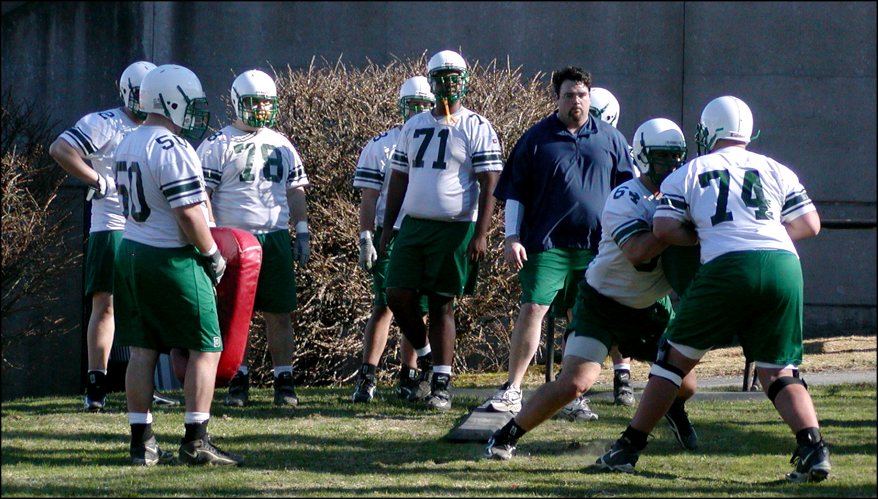 O-line coach Cyril Brockmeier puts his guys through their paces Wednesday.
 Steve Hunt (11) and Michael Cure (27) work Wednesday on a defensive back drill.
Keggy in Danger?
I was going to hold off on this posting, but, well, I can't. It's too provocative. Click here for a satirical look at "Eight Mascots that Need to Die." Wanna guess which unofficial mascot heads the list? ...
This brings up two points.
First, this is what Dartmouth gets for dragging its feet on naming a new mascot. ...
And second, thanks to a Green Alert subscriber for finding and sending along a link to this kind of arcane fluff on the 'Net. Folks, I can't dig it all up. There's good stuff out there. Please, send me links and I'll share them.
This brings up two points.
First, this is what Dartmouth gets for dragging its feet on naming a new mascot. ...
And second, thanks to a Green Alert subscriber for finding and sending along a link to this kind of arcane fluff on the 'Net. Folks, I can't dig it all up. There's good stuff out there. Please, send me links and I'll share them.
Gearing Up for Day 2 of Spring Football
NEW LINK: Click here for Harvey Yavener's column on Princeton's new line coach having to completely rebuild the Tiger offensive front. ...
Busy day. I'm trying to wrap up a freelance story this morning, then helping coach my son's Little League team (the Green Machine) through a practice and part of a scrimmage before cutting out for Alumni Gym and a writing assignment covering the opening of Dartmouth's fabulous new fitness facility. Then I'll head out the back door of the gym and catch most of spring football practice on Memorial Field. Check back tonight for a report. ...
The U.S. Mail brought an interesting packet a few days back from Jack DeGange, the former Dartmouth sports information director and unofficial athletic department historian. (See The Green Fields of Autumn, and Dartmouth College Hockey: Northern Ice.) The packet wasn't unexpected because Jack and I had spoken Friday about his idea: to select the All-Dartmouth team representing the 50 years of Ivy League play. (This is the anniversary year.) I've been poring over Dartmouth's All-Ivy representatives, record-holders and award winners. It's an honor to be on the selection panel and it's not an honor I'm taking lightly. I'm not sure if the team will be announced prior to its appearance in the press guide this summer, but when I find out I'll let you know. ... Curious about the first name I put down? Sure, it could have been Reggie Williams or Tom Csatari or Zack Walz, but I went Craig Morton '89 at wide receiver. Craig ran like the wind and was just plain magic to watch. Playing before the game really became wide open, he averaged a whopping 24.2 yards per catch as a sophomore and graduated as the college's all-time receiving leader. He was invited to the NFL Combine but elected to put off pro football before playing in NFL Europe. For all the outstanding receivers the Ivies have had in the past 10 years or so, none of them could fly like Craig. ...
Spring ball and summer camp are going to be a virtual casting call for a new quarterback at Yale, according to this lengthy story in the college paper. ... Yale, by the way, might be breaking new ground with an internet broadcast of its spring game. ... Ah, but if it's new ground, it's just new Ivy ground. Holy Cross is doing the same thing.
Busy day. I'm trying to wrap up a freelance story this morning, then helping coach my son's Little League team (the Green Machine) through a practice and part of a scrimmage before cutting out for Alumni Gym and a writing assignment covering the opening of Dartmouth's fabulous new fitness facility. Then I'll head out the back door of the gym and catch most of spring football practice on Memorial Field. Check back tonight for a report. ...
The U.S. Mail brought an interesting packet a few days back from Jack DeGange, the former Dartmouth sports information director and unofficial athletic department historian. (See The Green Fields of Autumn, and Dartmouth College Hockey: Northern Ice.) The packet wasn't unexpected because Jack and I had spoken Friday about his idea: to select the All-Dartmouth team representing the 50 years of Ivy League play. (This is the anniversary year.) I've been poring over Dartmouth's All-Ivy representatives, record-holders and award winners. It's an honor to be on the selection panel and it's not an honor I'm taking lightly. I'm not sure if the team will be announced prior to its appearance in the press guide this summer, but when I find out I'll let you know. ... Curious about the first name I put down? Sure, it could have been Reggie Williams or Tom Csatari or Zack Walz, but I went Craig Morton '89 at wide receiver. Craig ran like the wind and was just plain magic to watch. Playing before the game really became wide open, he averaged a whopping 24.2 yards per catch as a sophomore and graduated as the college's all-time receiving leader. He was invited to the NFL Combine but elected to put off pro football before playing in NFL Europe. For all the outstanding receivers the Ivies have had in the past 10 years or so, none of them could fly like Craig. ...
Spring ball and summer camp are going to be a virtual casting call for a new quarterback at Yale, according to this lengthy story in the college paper. ... Yale, by the way, might be breaking new ground with an internet broadcast of its spring game. ... Ah, but if it's new ground, it's just new Ivy ground. Holy Cross is doing the same thing.
Subscribe to:
Posts (Atom)